By Dr. Claudia Rivera · Published March 27, 2025 · 6 min read
Granola contains roughly 130–140 calories per ¼-cup (28 g) serving — but the way most people eat it, the real number is far higher. A breakfast bowl typically holds two to four servings, and nut or chocolate varieties add another 30–60 calories on top of that. If you've been asking how many calories in granola you're actually consuming, portion size is the most important variable to understand.
Granola Calories by Serving Size
The USDA FoodData Central reports standard granola with nuts at approximately 490 calories per 100 g. Here is how that translates to common kitchen measures:
| Serving Size | Weight | Calories (approx.) |
|---|---|---|
| 1 tablespoon | ~10 g | ~49 cal |
| ¼ cup (standard label serving) | 28–30 g | 130–140 cal |
| ⅓ cup | ~37 g | 170–185 cal |
| ½ cup | ~55 g | 255–275 cal |
| 1 cup | ~110 g | 490–540 cal |
The ¼-cup figure is the most commonly listed serving size on nutrition labels, but the average breakfast bowl holds two to four times that volume. A 2021 study in Nutrients found participants free-poured a median of 95 g of granola when asked to serve themselves — more than three times the labeled serving.
Portion Distortion
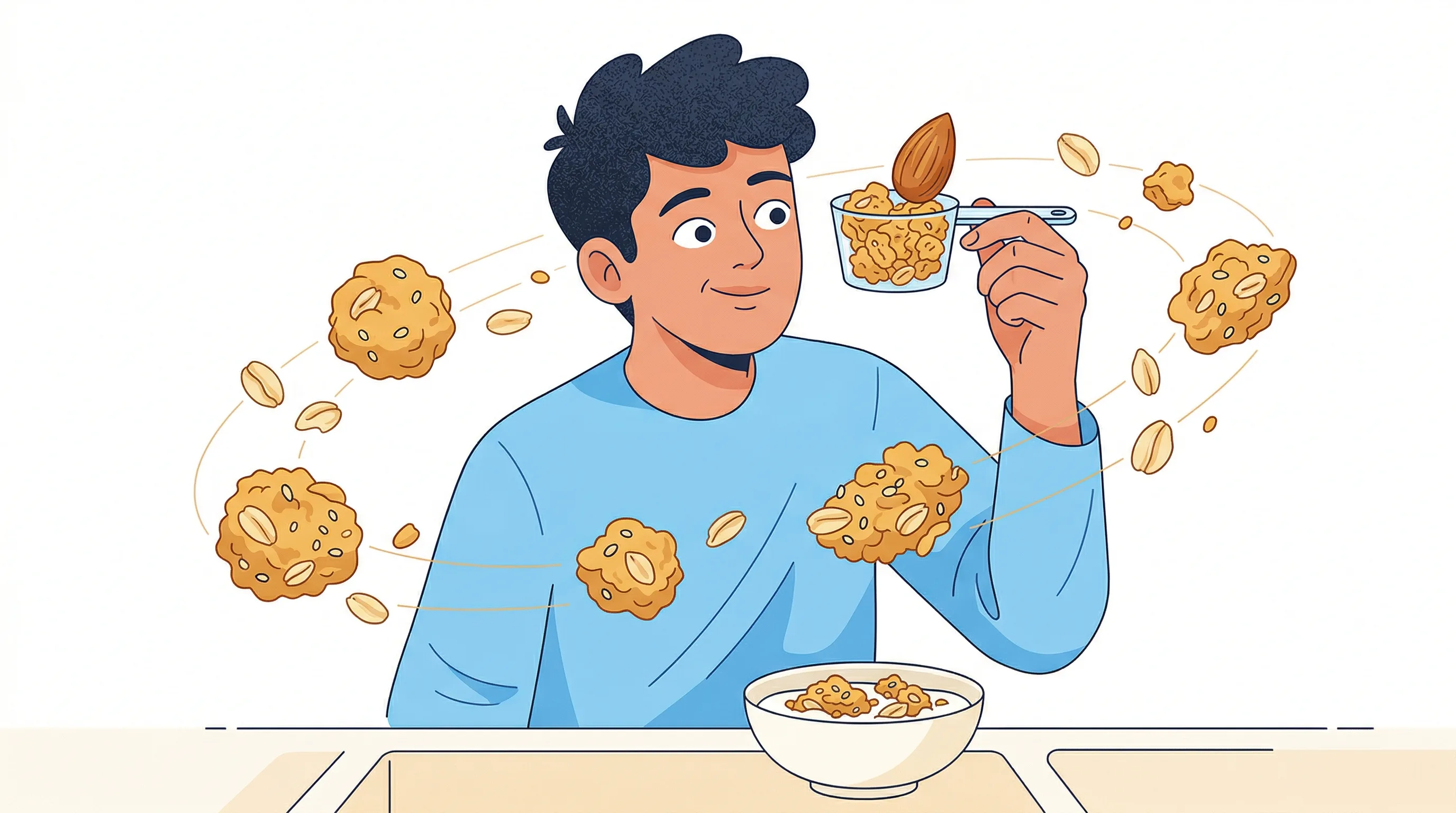
Granola looks deceptively small and light in a bowl. Before you pour, measure your serving using a measuring cup or kitchen scale. Our portion sizes guide covers the fastest methods for controlling portions without obsessing over every gram.
Calories by Granola Type
Not all granola is equal. The add-ins that give granola its texture and flavor — nuts, dried fruit, chocolate chips — significantly change the calorie count at the same measured volume.
| Granola Type | Calories per ¼ cup (~28 g) | Key Driver |
|---|---|---|
| Plain (oats + honey or maple) | 120–140 cal | Baseline |
| With nuts (almonds, walnuts) | 150–180 cal | Added fat from nuts |
| With dried fruit (raisins, cranberries) | 145–165 cal | Added sugar from fruit |
| With chocolate chips | 160–200 cal | Fat and sugar from chocolate |
| Low-fat granola | 100–120 cal | Reduced oil |
| Homemade (minimal sweetener) | 93–130 cal | Controlled ingredients |
Choosing plain granola over a chocolate chip variety saves roughly 200–280 extra calories per week — just from that one swap. If you are actively tracking a calorie deficit for weight loss, granola type is a lever worth pulling.
Popular Brand Calories at a Glance
Store-bought granola varies widely. These figures come from current nutrition labels:
| Brand & Variety | Serving Size | Calories |
|---|---|---|
| Nature Valley Oats & Honey Granola | ⅔ cup (65 g) | 270 cal |
| Quaker Simply Granola (Honey & Almonds) | ½ cup (55 g) | 250 cal |
| Quaker Natural Granola (Oats & Honey) | ½ cup (48 g) | 210 cal |
| Kellogg's Low Fat Granola (no raisins) | 100 g reference | ~389 cal |
| True North Craft Granola (plain) | ¼ cup (28 g) | 120–145 cal |
Always compare brands at the same weight — per 100 g — rather than per listed serving, because manufacturers set their own serving sizes. Nature Valley's ⅔-cup serving is more than double the standard ¼-cup reference, which is why it reads 270 calories rather than ~140.
Granola vs. Breakfast Alternatives
Comparing granola to other morning staples by similar dry weight makes the calorie picture clear:
| Food | Serving | Calories | Fiber | Protein | Sugar |
|---|---|---|---|---|---|
| Granola (plain) | ½ cup / 55 g dry | ~270 cal | 4.7 g | 8 g | 11 g |
| Rolled oats (cooked) | 1 cup / 240 g | ~166 cal | 4 g | 6 g | 0.6 g |
| Muesli (raw, unsweetened) | ½ cup / 55 g | ~200 cal | 4 g | 6 g | 4 g |
| Bran flakes | ¾ cup / 30 g | ~95 cal | 5 g | 3 g | 6 g |
| Corn flakes | 1 cup / 28 g | ~100 cal | 0.9 g | 2 g | 2.4 g |
Cooked oatmeal delivers comparable fiber and protein at roughly 60% fewer calories than granola by volume. The gap exists because the baking process — rolling oats with oil and sweetener, then applying heat — removes moisture and concentrates calories. Muesli, the closest cousin to granola (raw oats, seeds, no baking), lands 50–70 calories lower per serving without sacrificing fiber or protein.
The Granola Portion Problem
Granola is one of the most commonly underestimated breakfast foods. Hidden calories in everyday foods tend to cluster around items that look and feel wholesome — and granola sits firmly in that category.
A café yogurt parfait with granola typically contains 380–450 calories. An "overnight oats" bowl topped generously with granola can exceed 600 calories before you add milk. The practical solution: treat granola as a condiment rather than a cereal base. Two tablespoons (about 10–12 g) on Greek yogurt adds roughly 50–60 calories of crunch and fiber. A full bowl at three servings adds 390–420 calories before anything else goes in.
Research also supports the health case for modest portions: a 2022 crossover study published in Nutrients found that oat-based granola with beta-glucan fiber significantly improved blood glucose response and increased levels of PYY, a satiety hormone — suggesting that even small amounts of the right granola can support fullness and glycemic control.
Lower-Calorie Granola Options
If you enjoy granola but want to manage calories, these approaches reliably reduce the count without sacrificing the crunch:
- Choose low-fat or plain varieties — look for under 6 g of added sugar and under 8 g of fat per ¼-cup serving.
- Make it at home — replacing oil with egg whites for binding can bring a homemade batch down to 93–130 calories per serving while keeping the clusters intact.
- Use it as a topper — two tablespoons on yogurt or a smoothie bowl gives you the texture and flavor for a fraction of the calorie cost.
- Weigh your portion — a kitchen scale removes guesswork entirely. Our guide on how to track calories accurately walks through the fastest way to build this habit.
Frequently Asked Questions
How many calories are in ¼ cup of granola?
A standard ¼-cup serving (28–30 g) contains roughly 130–140 calories for plain varieties. Nut-heavy or chocolate granola can reach 160–200 calories for the same volume. The ¼-cup figure is what most nutrition labels use as a reference serving.
Is granola good for weight loss?
Granola can work within a weight-loss diet if portions are controlled. The calorie density is the challenge: a single cup can contain more calories than a full cooked meal. Research on oat beta-glucan suggests that even small granola portions improve satiety — but only if you are not also free-pouring multiple servings. See our full guide on how many calories you should eat per day to calculate how granola fits your personal budget.
What is the healthiest granola to buy?
Look for granola with whole-grain oats as the first ingredient, under 6 g of added sugar per serving, under 8 g of fat per serving (unless from whole nuts), and no refined syrups or oils beyond honey or maple. Low-fat varieties from brands like Kellogg's and True North Craft run 100–145 calories per ¼-cup serving.
Can I eat granola every day?
Yes, in measured portions. Daily consumption of oat-based granola (around 45 g) was associated with reduced LDL cholesterol and improved gut microbiota in a six-week clinical study in Nutrients. The caveat is the added sugar and calorie density — stick to ¼ cup (28 g) measured, not poured.
Start Tracking What You Actually Eat
Knowing granola's calorie count is the first step — tracking it consistently across meals is what produces results. Caloria, the AI calorie tracker, makes it effortless: photograph your breakfast bowl and get an instant calorie and macro breakdown with no manual entry required.
Download Caloria and see exactly what is in your bowl:
Medical Disclaimer
This article is for informational purposes only and does not constitute medical or dietary advice. Consult a registered dietitian or healthcare professional before making significant changes to your diet.