By Dr. Claudia Rivera · Published December 20, 2024 · 6 min read
Hidden calories in food are the invisible gap between what you think you're eating and what you're actually consuming. A landmark study published in the New England Journal of Medicine found that subjects underreported their calorie intake by an average of 47 percent. Even healthy-weight adults typically underestimate by 20 percent. Those numbers translate to hundreds of calories a day quietly stalling progress.
The good news: hidden calories aren't random. They cluster in predictable places. Once you know where to look, they become straightforward to find and account for.
The Five Biggest Hiding Spots
Cooking oils and fats contribute more untracked calories than almost anything else. A single tablespoon of olive oil contains 119 calories. Most people free-pour oil from the bottle — often two to three tablespoons per meal — without registering it. That's 240 to 360 extra calories that never appear in the mental estimate of "grilled chicken and vegetables." Butter, ghee, and coconut oil carry similar density at around 100 to 130 calories per tablespoon.
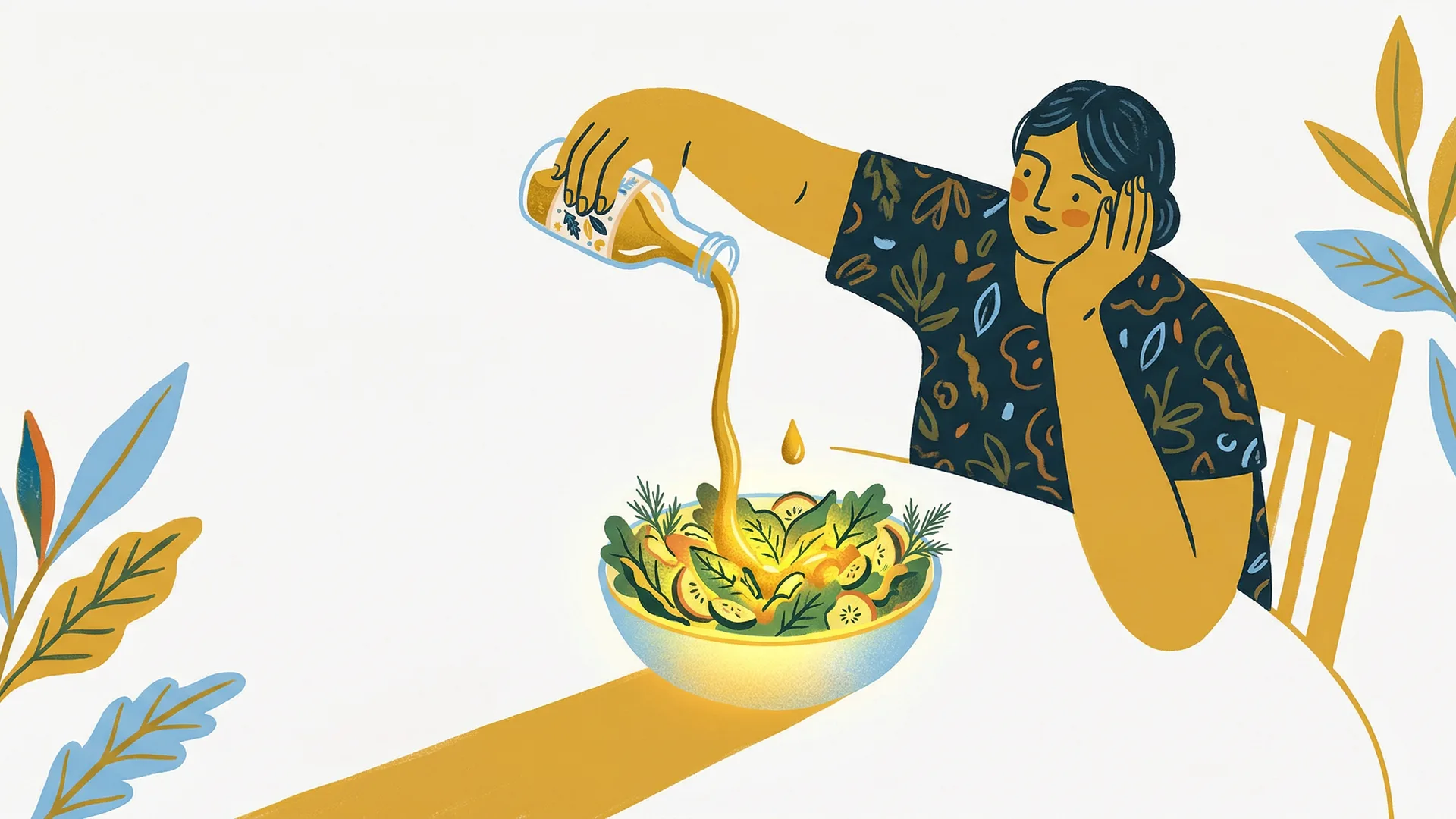
Salad dressings and sauces are where healthy-looking meals go wrong most dramatically. Two tablespoons of Caesar dressing deliver around 170 calories. Ranch adds 129 calories per two tablespoons. At a restaurant, a single dressing pour is typically four to six tablespoons — meaning 300 to 500 calories drizzled over leaves. Store-bought pasta sauces and marinades follow the same pattern: a quarter-cup of commercial tomato sauce can contain 70 to 100 calories from added oils and sugar alone.
Liquid calories do the most invisible damage because they don't trigger fullness signals the way solid food does. Your brain processes a 300-calorie latte as if you drank nothing, then expects a full meal on top.
| Drink | Actual Calories | What People Assume |
|---|---|---|
| Medium flavored latte (16 oz) | 300–400 kcal | ~50 kcal |
| Commercial green smoothie (16 oz) | 250–350 kcal | ~100 kcal |
| Fresh-pressed orange juice (16 oz) | 220 kcal | ~80 kcal |
| Homemade fruit smoothie (blended) | 400–600 kcal | ~150 kcal |
| Sweetened iced tea (large) | 180–250 kcal | ~0 kcal |
Condiments and spreads accumulate in small amounts that feel insignificant. A tablespoon of peanut butter: 95 calories. Two tablespoons of mayo on a sandwich: 180 calories. A drizzle of honey over yogurt: 60 calories. Croutons on a salad: 60 to 80 calories. None of these feel like a meal — but together they can silently add 400 calories to a day that looked completely controlled on paper.
Restaurant portion distortion is the final multiplier. Most restaurant servings are two to three times a standard portion. A pasta dish listing 500 calories per serving may contain 1.5 to 2 servings in the actual bowl. Research from Michigan State University Extension confirms that diners consistently underestimate restaurant meal calories by 20 to 40 percent.
The "Healthy Halo" Problem
The foods most people underestimate are the ones labeled or perceived as healthy. When something is presented as nutritious, people assume it's also low in calories — a well-documented bias known as the health halo effect.
Granola is the clearest example. A half-cup serving contains 200 to 300 calories, mostly from oats, honey, and oil. People routinely pour a full cup as a "light" snack. Avocado toast on thick sourdough with a drizzle of olive oil can hit 500 calories before any toppings. A breakfast smoothie with banana, almond butter, oat milk, protein powder, and honey can top 650 calories — more than a full lunch.
Common 'Healthy' Meals and Their Real Calorie Counts
- Restaurant Caesar salad — 600–900 kcal with standard dressing and croutons
- Acai bowl — 400–700 kcal depending on toppings and granola
- Granola with almond milk — 450–600 kcal for a typical bowl
- Avocado toast (thick slice, egg) — 400–550 kcal
- Green smoothie (commercial) — 250–450 kcal
If you've been wondering why the scale won't budge despite eating in a calorie deficit, hidden calories in these perceived-healthy foods are the most likely explanation.
How to Find Hidden Calories
The most reliable strategy is to measure rather than estimate. Oil poured freely into a pan is invisible; oil weighed on a scale is exactly 119 calories per tablespoon. Learning how to calculate food calories accurately — using a scale and verified database entries — removes most of the guesswork.
Reading nutrition labels is essential, but the serving size line is where most people are tripped up. A bag of chips may list 130 calories per serving with 2.5 servings per bag. A bottle of juice shows 120 calories per serving with two servings per bottle. Knowing how many calories you actually need each day puts these numbers in context and makes it easier to spot when a "small snack" has quietly consumed a quarter of your daily budget.
If you want to track without manual weighing for every meal, Caloria uses AI photo recognition to estimate calories from a photo — including the dressing on the salad and the oil on the pan.
Medical Disclaimer
This article is for informational purposes only and does not constitute medical or dietary advice. Consult a registered dietitian or healthcare professional before making significant changes to your diet.
Stop Guessing, Start Seeing
Hidden calories are predictable once you know the pattern: oils, dressings, liquid calories, condiments, and restaurant portion sizes. A single day of free-poured cooking oil, a flavored coffee, and an unmeasured salad dressing can add 800 to 1,000 calories beyond what you consciously recorded — enough to completely cancel a calorie deficit.
Awareness is the first step. Measuring is the second. And a consistent tracking habit ties it all together.
Download Caloria and see your real numbers:
Frequently Asked Questions
What are the most common sources of hidden calories?
Cooking oils, salad dressings, sauces, and liquid calories — coffee drinks, juices, and smoothies — are the biggest sources. A tablespoon of olive oil adds 119 calories, and restaurant salad dressing typically adds 300 to 500 calories to an otherwise light meal.
Why am I gaining weight eating healthy food?
Hidden calories in perceived-healthy foods are the most common culprit. Granola, smoothies, avocado, nut butters, and salad dressings all carry substantial calories that rarely get counted. Research shows most people underestimate their intake by 20 to 50 percent, often because of these invisible additions.
How many calories does salad dressing add?
Two tablespoons of Caesar dressing add roughly 170 calories. Restaurant servings are typically four to six tablespoons — meaning 340 to 500 calories from dressing alone. Asking for dressing on the side and measuring it gives you control back.
Do liquid calories count the same as food calories?
Yes — a calorie from a drink is identical to a calorie from solid food. What makes liquid calories more dangerous is that they bypass satiety signals. Your body does not register drinks the same way it registers solid food, so you eat a full meal afterward regardless.
How can I find hidden calories in my meals?
Weigh oils and liquids rather than pouring freely, read nutrition labels paying close attention to serving size, ask for sauces and dressings on the side at restaurants, and log every ingredient including condiments and spreads. Consistency matters more than perfection.