By Dr. Jane Smith · Published November 22, 2025 · 9 min read
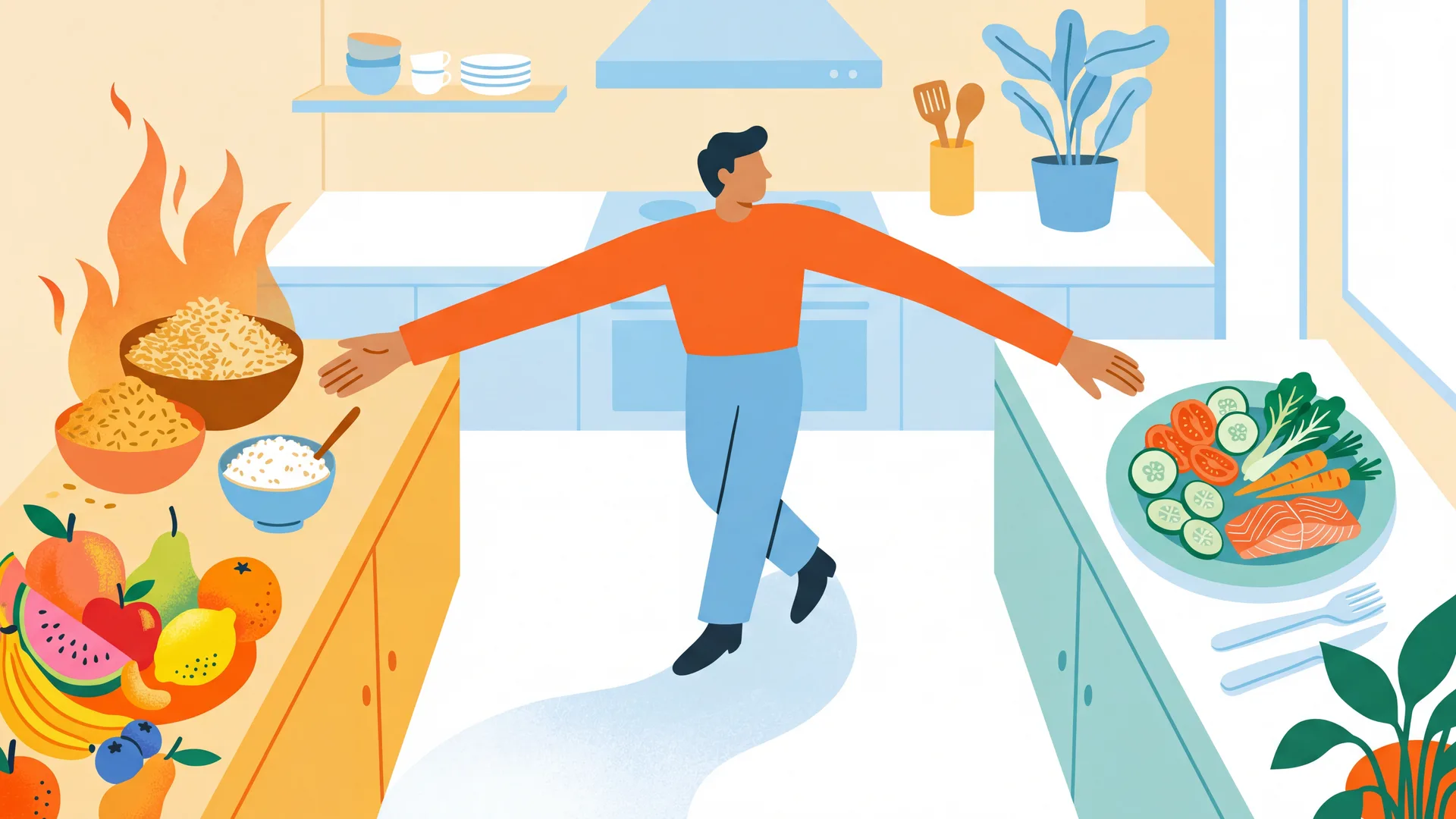
A macro cycling meal plan structures your week around intentional variation: some days you eat more carbohydrates to power hard workouts, other days you scale back to encourage fat burning. The total calories stay close to your goal every single day — only the macronutrient split shifts.
This guide explains how macro cycling works, how to calculate your targets, and gives you a ready-to-use 7-day example with real meals.
Medical Disclaimer
This article is for informational purposes only and does not constitute medical advice. Consult a registered dietitian or healthcare professional before making significant changes to your diet, especially if you have a medical condition.
What Is Macro Cycling?
Macro cycling is a nutrition approach where you rotate between different macronutrient ratios across the week, most commonly cycling between high-carbohydrate and low-carbohydrate days. Unlike a static macro plan where you eat the same split every day, macro cycling deliberately varies carbs and fat while holding protein constant.
The logic is straightforward: on days when you train hard, your muscles need glycogen (stored carbohydrate) to perform. On rest days or easy training days, your carbohydrate demand drops — and redirecting those calories to fat creates an environment that favors fat oxidation.
According to Healthline's overview of macro cycling, the approach is particularly popular among athletes and body composition-focused individuals who want to maintain energy for performance while still pursuing fat loss.
Macro Cycling vs. Carb Cycling
These two strategies are closely related but not identical.
| Feature | Macro Cycling | Carb Cycling |
|---|---|---|
| What changes | Carbs AND fat shift inversely | Only carbs shift |
| Protein | Fixed every day | Fixed every day |
| Daily calories | Stays consistent | May vary slightly |
| Planning complexity | Moderate | Simpler |
| Fat intake | Rises on low-carb days | Often stays fixed |
| Best for | Body composition, flexible dieters | Endurance athletes, strict protocols |
The practical difference: in a carb cycling plan, your low-carb days leave a calorie gap (fewer carbs, same fat). In a macro cycling plan, fat fills that gap — so your energy intake stays stable and hunger is easier to manage.
How to Set Your Macro Targets
Before building the 7-day plan, calculate your personal targets. This takes two steps.
Step 1: Know Your TDEE
Your Total Daily Energy Expenditure (TDEE) is the number of calories your body burns in a day, accounting for activity. You can calculate it using our macro calculator for weight loss. Most adults who exercise 3–5 days per week have a TDEE between 1,800 and 2,800 calories.
For this guide, we'll use 2,000 calories as the example target.
Step 2: Set Your Three Day Types
With a 2,000 kcal daily target, here is how to split macros across day types:
| Day Type | Carbs | Protein | Fat | When to Use |
|---|---|---|---|---|
| High carb | 250g (50%) | 150g (30%) | 44g (20%) | Intense training days |
| Moderate carb | 200g (40%) | 150g (30%) | 67g (30%) | Light training, active recovery |
| Low carb | 125g (25%) | 175g (35%) | 89g (40%) | Rest days, walks, yoga |
Protein is fixed at 150–175g regardless of day type. Carbs and fat shift inversely to keep calories constant. If you weigh significantly more or less than 75 kg (165 lb), scale the protein up or down to stay in the range of 1.6–2g per kilogram of body weight.
Don't Go Too Low
Dropping below 100g of carbohydrates on low days is rarely necessary for non-keto protocols. Very low carb days can impair recovery if they follow an intense training session. Keep low-carb days on genuine rest days.
Your 7-Day Macro Cycling Meal Plan
This plan is built around a common training schedule: three intense sessions (Days 1, 4, 7), two moderate sessions (Days 3, 6), and two rest days (Days 2, 5). Adjust the day types to match your own schedule.
Day 1 — High Carb (Training Day)
Target: ~2,000 kcal | 250g carbs | 150g protein | 44g fat
- Breakfast: Oatmeal (80g dry) with banana, blueberries, and a scoop of whey protein
- Lunch: Brown rice (200g cooked), grilled chicken breast (175g), roasted bell peppers
- Snack: Rice cakes (3) with low-fat cottage cheese and sliced strawberries
- Dinner: Whole-grain pasta (180g cooked), turkey mince bolognese, side salad
Day 2 — Low Carb (Rest Day)
Target: ~2,000 kcal | 125g carbs | 175g protein | 89g fat
- Breakfast: 3-egg omelette with spinach, feta, and avocado (½)
- Lunch: Large salad with grilled salmon (200g), mixed greens, cucumber, olive oil dressing
- Snack: Greek yogurt (full-fat, 150g) with a handful of mixed nuts
- Dinner: Baked chicken thighs (200g), broccoli, zucchini roasted in olive oil
Day 3 — Moderate Carb (Light Training)
Target: ~2,000 kcal | 200g carbs | 150g protein | 67g fat
- Breakfast: 2 slices whole-grain toast, 2 eggs scrambled, sliced tomato
- Lunch: Sweet potato (200g baked), grilled cod (175g), steamed green beans
- Snack: Apple with 2 tbsp almond butter
- Dinner: Stir-fry with chicken breast (175g), broccoli, snap peas, soy sauce, brown rice (150g cooked)
Day 4 — High Carb (Training Day)
Target: ~2,000 kcal | 250g carbs | 150g protein | 44g fat
- Breakfast: Banana smoothie: 1 banana, 250ml semi-skimmed milk, 1 scoop vanilla protein powder, 40g oats
- Lunch: Chicken and rice bowl — chicken breast (175g), jasmine rice (200g cooked), edamame, cucumber
- Snack: Low-fat yogurt (200g) with granola (30g)
- Dinner: Turkey and vegetable stir-fry with noodles (150g cooked), teriyaki glaze
Day 5 — Low Carb (Rest Day)
Target: ~2,000 kcal | 125g carbs | 175g protein | 89g fat
- Breakfast: Full-fat Greek yogurt (200g), mixed berries (small handful), walnuts
- Lunch: Tuna salad (2 cans tuna, celery, red onion, olive oil mayo), mixed lettuce leaves
- Snack: Hard-boiled eggs (2) with cucumber sticks and hummus (30g)
- Dinner: Baked salmon fillet (200g), asparagus, side of cauliflower mash with butter
Day 6 — Moderate Carb (Active Recovery)
Target: ~2,000 kcal | 200g carbs | 150g protein | 67g fat
- Breakfast: Porridge (60g oats) with semi-skimmed milk, chopped apple, cinnamon
- Lunch: Lentil soup (300ml) with a slice of whole-grain bread, grilled chicken (150g)
- Snack: Handful of grapes, string cheese
- Dinner: Lean beef mince (175g) in tomato sauce with whole-grain spaghetti (150g cooked), side salad
Day 7 — High Carb (Training Day)
Target: ~2,000 kcal | 250g carbs | 150g protein | 44g fat
- Breakfast: Overnight oats (80g dry oats, protein powder, banana, raspberries)
- Lunch: Jacket sweet potato (large), tuna (1 can), side salad
- Snack: Fruit and protein smoothie: mango, orange juice, protein powder
- Dinner: Grilled chicken breast (175g), corn, peas, roasted new potatoes (250g)
Best Foods for Each Day Type
Choosing the right foods makes hitting your macros far easier than tracking individual grams of everything.
High-Carb Day Foods
Low-Carb Day Foods
Common Macro Cycling Mistakes
Most people get macro cycling wrong in one of three ways.
Treating low-carb days as punishment. Low-carb days are not a deficit — calories stay constant, fat goes up. If you eat low-carb AND low-fat on a rest day, you'll undereat. That's a different strategy (and usually an uncomfortable one).
Randomly assigning day types. High-carb days should align with your hardest sessions. Check your training schedule first, then lay the macro pattern over it. If you have an unplanned intense session on a scheduled low-carb day, swap the day types — it's that flexible.
Skipping the moderate days. Many people plan only high and low days. Moderate days act as a buffer, reducing the metabolic whiplash between extremes and making the plan feel sustainable long-term.
A 2013 randomized controlled trial published in the British Journal of Nutrition found that intermittent carbohydrate restriction (two low-carb days per week) produced greater fat loss and improved insulin sensitivity compared to continuous daily caloric restriction — directly supporting the underlying logic of macro cycling.
Track Your Macro Cycles Without Spreadsheets
Manually calculating 3 different macro targets across 7 days gets complicated fast. If you want to see exactly how each meal stacks up, try Caloria — just snap a photo of your plate and get an instant breakdown of carbs, protein, and fat. It removes the need to weigh and log every ingredient.
This is especially useful when rotating between day types, since the same meal (say, chicken and rice) will look very different in terms of portion balance on a high-carb day versus a moderate day.
Frequently Asked Questions
What is macro cycling and how does it work?
Macro cycling varies your carbohydrate and fat intake across different days of the week while keeping protein constant and total calories stable. High-carb days fuel intense training sessions; low-carb days promote fat oxidation on rest days.
How is macro cycling different from carb cycling?
Carb cycling varies only carb intake, sometimes leaving a calorie gap. Macro cycling keeps total calories stable by raising fat when carbs drop. It's generally easier to sustain because hunger is better controlled.
Is macro cycling effective for weight loss?
Yes, when total weekly calories remain below your TDEE. The strategy's main advantage is that it aligns fuel with demand — better performance on training days, better fat burning on rest days — without requiring a daily calorie deficit that can drain energy and impair recovery.
What should I eat on high-carb days?
Focus on complex carbohydrates: oats, rice, sweet potatoes, whole-grain pasta, fruit, and legumes. Keep fat low on these days (under 25% of calories). Pair carbs with lean protein at every meal.
How do I calculate macros for macro cycling?
Start with your TDEE. Set protein at 1.6–2g per kg of body weight daily. On high-carb days: 45–50% carbs, 20–25% fat. On low-carb days: 20–25% carbs, 40–45% fat. Keep total calories the same across all day types. For a custom breakdown, use our macro calculator for weight loss.
Start Your Macro Cycling Plan Today
Understanding macro cycling is the easy part — the harder part is tracking whether you're actually hitting different targets on different days. Caloria makes it effortless: take a photo of your meal, and the app gives you your carb, protein, and fat breakdown instantly.
Download Caloria and start tracking your cycles:
For more on related approaches, explore our guides on calorie cycling for weight loss and building a strategic calorie deficit.