By Dr. Dave Patel · Published December 5, 2024 · 10 min read
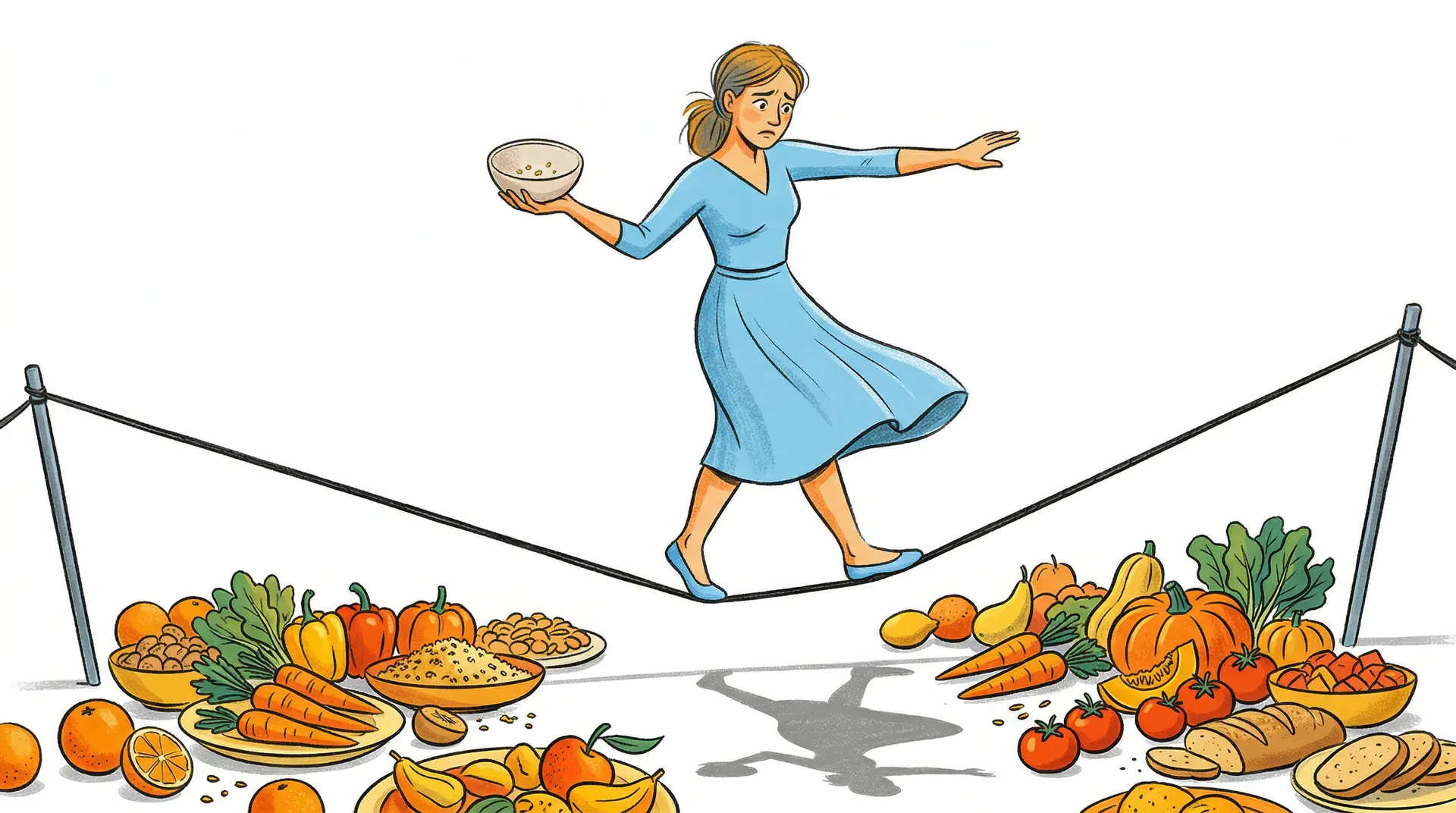
Most diets fail not because they are scientifically wrong, but because people can not stick to them. Calorie cycling for weight loss — also called the zigzag diet or calorie shifting — takes a different approach: instead of eating the same number of calories every day, you vary your intake across the week while keeping the total deficit intact.
The result, according to research, is the same amount of fat lost — but with meaningfully better adherence and less metabolic slowdown. This guide explains the science, the practical mechanics, and exactly how to build your own schedule.
What Is Calorie Cycling?
Calorie cycling is a dietary strategy in which you alternate between higher-calorie and lower-calorie days over the course of a week. Your weekly calorie total — and therefore your overall energy deficit — stays the same as it would on a traditional diet. Only the daily distribution changes.
The core idea is simple:
- High days: Eat at or near your maintenance calories (TDEE)
- Low days: Eat 30–40% below TDEE
- Medium days (optional): Eat roughly 500 calories below TDEE
By distributing the deficit unevenly, you break the psychological monotony of daily restriction and give your metabolism periodic "resets" that may slow the hormonal adaptations that stall traditional diets.
This is different from carb cycling, which specifically manipulates carbohydrate intake rather than total calories, and from intermittent fasting, which restricts eating to specific time windows rather than varying calorie totals.
What the Science Says
The evidence for calorie cycling is encouraging — especially around two outcomes that conventional diets often fail to deliver: adherence and metabolic preservation.
Adherence Is the Biggest Win
A 2014 clinical trial published in the International Journal of Preventive Medicine followed 74 overweight women assigned to either continuous calorie restriction or a calorie shifting protocol. The results were striking: the cycling group achieved 84.3% adherence, compared to just 63.2% in the restriction group. At the follow-up assessment, the cycling group had maintained significantly more of their weight loss (5.79% vs. 3.38%).
This matters more than it might seem. A diet you can sustain for six months will always outperform a theoretically superior diet you quit after three weeks.
Resting Metabolic Rate Appears Better Preserved
The same trial found that the continuous restriction group experienced a measurable decline in resting metabolic rate (RMR) — the classic "starvation mode" response — while the calorie cycling group's RMR remained unchanged throughout the study period.
A 2010 study from the Texas A&M University Exercise and Sport Nutrition Laboratory reached similar conclusions. Thirty-six overweight sedentary women who followed a diet cycling protocol over five months lost an average of 10.7 pounds without significant RMR reduction, suggesting that planned calorie variation may help preserve metabolic rate during weight loss.
Long-Term Data Is Still Limited
A 2024 review in Current Obesity Reports analyzed 23 studies on weight cycling and found no significant evidence of lasting metabolic damage — refuting the popular claim that cycling "ruins" your metabolism. However, it also noted that most individual studies are short-term (4–12 weeks), predominantly involve women, and use small sample sizes. A one-year head-to-head study found no significant difference in weight loss between cycling and steady restriction over 12 months.
The balanced conclusion: calorie cycling works at least as well as continuous restriction, probably better for most people because it is easier to maintain — but it is not magic.
The Bottom Line on the Science
Calorie cycling produces the same fat loss as conventional dieting when the weekly deficit is equal. Its main advantage is behavioral: higher adherence, reduced hunger, and better weight maintenance after the diet ends.
How to Build Your Calorie Cycling Schedule
The mechanics are simpler than they look. Here is a step-by-step approach to setting up your first week.
Step 1: Calculate Your Weekly Calorie Budget
Start by knowing your Total Daily Energy Expenditure (TDEE) — the number of calories your body burns in a typical day. Our guide on how many calories you should eat walks through this calculation.
Then set your weekly deficit target:
- Lose ~1 lb/week: 3,500 kcal weekly deficit (500/day equivalent)
- Lose ~0.5 lb/week: 1,750 kcal weekly deficit (250/day equivalent)
Your weekly calorie budget = (TDEE × 7) − weekly deficit target
Example: TDEE 2,000 kcal/day → weekly TDEE = 14,000 kcal. Targeting 1 lb/week loss → budget = 14,000 − 3,500 = 10,500 kcal for the week.
Step 2: Assign High and Low Days
Pair your high-calorie days with your most active days (workouts, long walks, physically demanding work). Pair low-calorie days with rest days. This aligns your fuel intake with your actual energy needs rather than arbitrarily restricting on days when your body needs more.
| Day Type | When to Use | Calorie Target (2,000 TDEE example) | Purpose |
|---|---|---|---|
| High day | Workout or active day | ~2,000 kcal (maintenance) | Fuel performance, reset metabolism |
| Medium day | Light activity / mixed day | ~1,500 kcal (−500) | Steady deficit, manageable hunger |
| Low day | Rest or sedentary day | ~1,200 kcal (−800) | Deeper deficit when you need less fuel |
Step 3: Plan a Sample Week
Using the example above (2,000 TDEE, 10,500 kcal weekly budget):
| Day | Type | Calories |
|---|---|---|
| Monday | Low (rest) | 1,200 |
| Tuesday | Medium | 1,500 |
| Wednesday | High (workout) | 2,000 |
| Thursday | Low (rest) | 1,200 |
| Friday | Medium | 1,500 |
| Saturday | High (workout) | 2,100 |
| Sunday | Medium | 1,000 |
| Weekly Total | 10,500 |
This schedule delivers the same 3,500-calorie weekly deficit as eating 1,500 calories every day — but Monday and Saturday feel very different from each other, which breaks the psychological grind of constant restriction.
Step 4: Adjust Based on Results
After two weeks, assess your average weight trend (not a single weigh-in). If you are losing too fast, add calories on your medium days first. If you are losing too slowly, reduce low days slightly. Recalculate TDEE every 10–15 pounds lost, as body composition changes affect your baseline.
For tips on troubleshooting a stalled scale, see our guide on why the scale stops moving in a calorie deficit.
What to Eat on High vs. Low Days
Calorie cycling is about quantity, not quality. The foods you eat on high days and low days should be broadly similar — the portions change, not the principles.
On high days:
- Prioritize protein to protect muscle mass (0.7–1g per pound of body weight)
- Include complex carbohydrates that fuel your workout and replenish glycogen
- Do not use high days as "free meals" — hitting your calorie target accurately matters
On low days:
- Lean protein becomes even more important — it is the most filling macronutrient per calorie
- Fill volume with non-starchy vegetables (broccoli, leafy greens, cucumber)
- Reduce added fats and starchy carbohydrates, which are calorie-dense and easy to overconsume
- Stay well hydrated — hunger and thirst signals overlap more than most people realize
Low Days Are Not Fasting Days
There is a meaningful difference between a structured low-calorie day (1,000–1,400 kcal) and skipping meals or eating under 800 kcal. Severe restriction on low days can increase muscle catabolism, worsen hunger on subsequent days, and undermine the adherence advantages calorie cycling is designed to provide.
Calorie Cycling vs. Continuous Restriction: Which Should You Choose?
Neither approach is universally superior. The right choice depends on your lifestyle, psychology, and goals.
| Factor | Calorie Cycling | Continuous Restriction |
|---|---|---|
| Daily flexibility | High — varies by day | Low — same target daily |
| Hunger management | Better — high days reduce cravings | Harder — constant restriction |
| Social eating | Easier — plan high day on weekend | Harder — every day requires restraint |
| Tracking complexity | Slightly higher — different targets | Simpler — same target every day |
| Evidence base | Emerging, positive short-term data | Extensive, well-established |
| Best for | Active lifestyle, variable schedule | Predictable routine, simplicity preference |
People who exercise several days a week tend to find calorie cycling especially intuitive — their body actually needs more fuel on training days and less on rest days. For those who prefer the simplicity of a single daily target, traditional continuous restriction is perfectly valid and well-supported.
If you are new to tracking your food intake entirely, our guide on how to track calories without going crazy covers the practical basics before adding cycling complexity.
The Role of Tracking in Calorie Cycling
Calorie cycling requires somewhat more precise tracking than continuous restriction because you have multiple daily targets to manage rather than one fixed number. This is where a reliable tracking method matters.
The most practical approaches:
- Food scale + app: Highest accuracy, especially useful when you are first calibrating your portion sizes on both high and low days
- AI photo tracking: Lower effort. Snap a photo of your meal and get an instant calorie estimate — this makes it easier to track consistently even when your targets vary
If you want to see exactly how your meals stack up against your daily cycling targets, try Caloria — just snap a photo and get your calorie and macro breakdown instantly, whether it is a high day or a low day.
Understanding what calories actually are and how your body processes them can also help you make smarter food choices on both types of days.
Setting Up Your Calorie Cycling Checklist
Start Tracking Smarter
Calorie cycling works because it takes the same math that drives all weight loss — a sustained weekly deficit — and makes it more livable. Higher days keep hunger and willpower fatigue at bay. Lower days push the deficit further when your body genuinely needs less fuel. And the total adds up the same.
Download Caloria and manage your high and low days effortlessly:
Medical Disclaimer
This article is for informational purposes only and does not constitute medical or dietary advice. Consult a registered dietitian or healthcare professional before making significant changes to your diet, especially if you have a medical condition or history of disordered eating.
Frequently Asked Questions
Does calorie cycling actually help you lose weight?
Yes — provided your total weekly calorie intake stays below your weekly energy expenditure. A 2014 clinical trial found that calorie cycling produced greater long-term weight maintenance than continuous restriction, largely because adherence was significantly higher (84.3% vs. 63.2%). Weekly deficit is the primary driver of fat loss regardless of how it is distributed.
How many calories should I eat on high and low days?
A simple starting point: set high days near your maintenance calories (TDEE) and low days 30–40% below TDEE. For a 2,000 kcal TDEE, that means roughly 2,000 kcal on high days and 1,200–1,400 on low days. As long as your weekly total creates the deficit you need, exact day-to-day distribution is flexible.
Is calorie cycling the same as carb cycling?
No. Calorie cycling varies total daily energy intake. Carb cycling varies specifically the carbohydrate portion of your diet — typically high carbs on training days and low carbs on rest days. You can combine both strategies, but they target different levers. Calorie cycling is broader and does not require macronutrient manipulation.
Can calorie cycling prevent metabolic slowdown?
Possibly. A 2014 trial found that calorie cycling preserved resting metabolic rate while continuous restriction caused it to decline. A 2024 review in Current Obesity Reports of 23 studies also found no lasting metabolic damage from cycling. That said, the primary benefit appears behavioral — better adherence leads to better outcomes, not a unique physiological mechanism.
Who should avoid calorie cycling?
Anyone with a history of disordered eating should work with a registered dietitian before attempting structured calorie manipulation. The approach is also not appropriate for pregnant or breastfeeding individuals, people managing conditions that require stable daily caloric intake, or anyone whose healthcare provider has recommended a consistent dietary pattern. When in doubt, always check first.