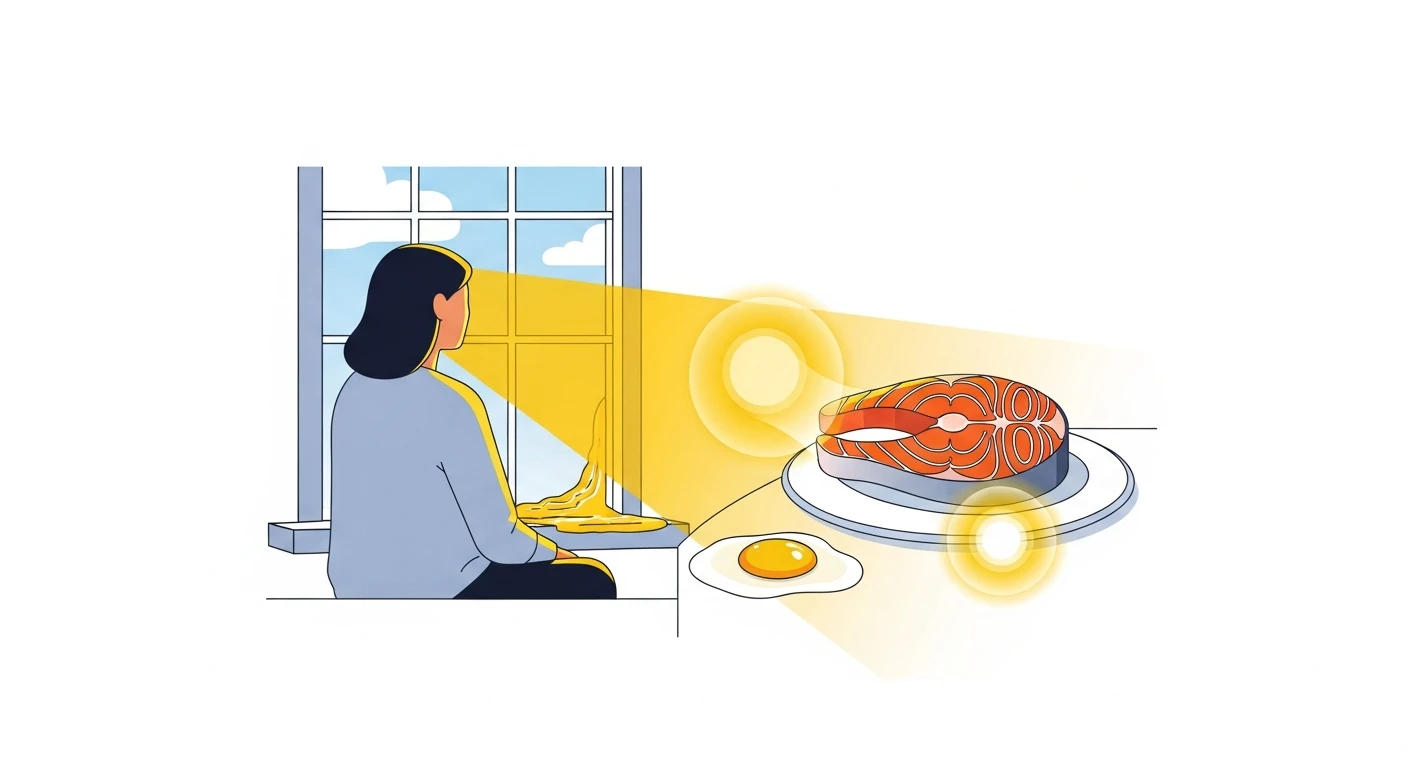
By Dr. Claudia Rivera · Published March 6, 2026 · 11 min read
Nearly 1 billion people worldwide are estimated to have vitamin D deficiency or insufficiency — and most have no idea. Unlike many nutrient shortfalls, vitamin D deficiency can quietly erode your energy, weaken your bones, suppress your immune system, and affect your mood for months before anything feels noticeably wrong.
The good news: effective vitamin D deficiency self-care is within reach for most people. This guide covers the symptoms, causes, risk factors, and — most importantly — five science-backed strategies to restore your levels and maintain them long-term.
Medical Disclaimer
This article is for informational purposes only and does not constitute medical advice. If you suspect vitamin D deficiency, consult a healthcare professional to confirm with a blood test and determine the appropriate treatment plan.
What Is Vitamin D Deficiency?
Vitamin D is a fat-soluble nutrient that functions more like a hormone than a typical vitamin. Your body synthesizes it when ultraviolet B (UVB) light hits your skin, and you also absorb modest amounts from certain foods and supplements. It plays critical roles in calcium absorption, bone mineralization, immune regulation, and neurotransmitter production.
Vitamin D deficiency is clinically defined as a blood level below 12 ng/mL (30 nmol/L) of 25-hydroxyvitamin D — the form measured on a standard lab test. Insufficiency falls between 12–30 ng/mL. According to the NIH Office of Dietary Supplements, most adults should aim for a level above 30 ng/mL, with 50–80 ng/mL considered optimal for bone and immune health.
| Status | Blood Level (ng/mL) | Blood Level (nmol/L) | Clinical Significance |
|---|---|---|---|
| Deficient | Below 12 | Below 30 | High risk of bone disease, muscle weakness, immune dysfunction |
| Insufficient | 12–30 | 30–75 | Subtle symptoms likely; most adults should be higher |
| Sufficient | 30–50 | 75–125 | Adequate for most health outcomes |
| Optimal | 50–80 | 125–200 | Associated with best immune, mood, and bone outcomes |
| Potentially toxic | Above 150 | Above 375 | Risk of hypercalcemia; do not supplement to this range |
Common Symptoms of Vitamin D Deficiency
The most challenging aspect of this deficiency is that most people are asymptomatic — the condition is silent until it becomes severe. When symptoms do appear, they are often nonspecific and easy to attribute to stress, aging, or other causes:
- Persistent fatigue — one of the most commonly reported symptoms; vitamin D plays a role in mitochondrial energy production
- Bone and joint pain — particularly in the lower back, hips, and legs; severe deficiency leads to osteomalacia (softening of the bones) in adults
- Muscle weakness and aches — vitamin D receptors are found throughout muscle tissue, and deficiency measurably reduces muscle function
- Frequent illness — vitamin D activates T-cells and macrophages, the immune cells that fight off bacteria and viruses
- Mood changes and depression — vitamin D supports serotonin synthesis; deficiency is consistently associated with higher rates of depression and anxiety
- Hair loss — severe long-term deficiency is linked to alopecia areata in some individuals
- Slow wound healing — vitamin D promotes keratinocyte activity required for skin repair
- Poor sleep — research indicates deficiency is associated with shorter sleep duration, delayed sleep onset, and disrupted sleep quality
In children, severe deficiency causes rickets — characterized by soft, bowed bones and developmental delays. The adult equivalent is osteomalacia, which presents as diffuse bone pain and muscle tenderness.
The Invisible Deficiency
Because symptoms are vague and often overlap with other conditions, the only reliable way to diagnose vitamin D deficiency is a blood test measuring 25-hydroxyvitamin D. Do not self-diagnose based on symptoms alone.
Who Is Most at Risk?
Certain groups face a disproportionately higher risk. A pooled analysis of 7.9 million participants across 81 countries found that nearly 48% of people globally fall below the 50 nmol/L threshold — with even higher rates in specific populations.
Key risk factors include:
- Age over 65 — skin produces roughly four times less vitamin D from the same sun exposure as younger adults
- Darker skin tone — melanin reduces UVB absorption efficiency, requiring significantly more sun exposure for equivalent synthesis
- Living above 35°N latitude — north of Los Angeles, Atlanta, or Madrid, UVB rays are too weak for meaningful vitamin D synthesis from November through March
- Limited sun exposure — working indoors full-time, being homebound, or wearing full-body covering clothing
- Obesity (BMI over 30) — adipose tissue sequesters vitamin D, reducing its bioavailability in the bloodstream
- Malabsorption conditions — Crohn's disease, celiac disease, cystic fibrosis, and ulcerative colitis all impair fat-soluble vitamin absorption
- Chronic kidney or liver disease — these organs convert vitamin D into its active form; disease impairs this conversion
- Breastfed infants — breast milk is naturally low in vitamin D; supplementation is typically recommended from birth
Causes of Vitamin D Deficiency
Understanding the cause of your deficiency is essential for choosing the most effective self-care approach.
Insufficient sun exposure is the primary driver globally. Modern indoor lifestyles mean many people spend most daylight hours inside — and glass windows block UVB rays entirely, meaning sitting by a sunny window produces zero vitamin D synthesis.
Inadequate dietary intake compounds the problem. Very few foods naturally contain meaningful amounts of vitamin D, making it difficult to meet the recommended 600 IU (15 mcg) per day for adults aged 19–70 through diet alone.
Medications that deplete or interfere with vitamin D metabolism include long-term corticosteroids, seizure medications (phenobarbital, carbamazepine), rifampin, and certain cholesterol-lowering drugs. If you take any of these regularly, proactive monitoring is warranted.
Malabsorption — any condition reducing fat absorption reduces vitamin D absorption, since it is fat-soluble. Gastric bypass surgery carries the same risk.
Vitamin D Deficiency Self-Care: 5 Key Strategies
Here is a practical, evidence-based framework for vitamin D deficiency self-care — spanning sun exposure, food, supplementation, and absorption optimization.
1. Make the Most of Safe Sun Exposure
Sunlight is the most natural source of vitamin D. 5–30 minutes of midday sun (10am–3pm) on exposed skin — face, arms, and legs — two to three times per week can maintain levels in lighter-skinned individuals in sunny climates during summer months.
Several factors limit this approach in practice:
- Glass windows block UVB completely (no vitamin D synthesized indoors near a window)
- Sunscreen at SPF 15 blocks approximately 93% of UVB production
- Cloud cover, shade, and air pollution reduce UVB intensity significantly
- Latitudes above 35°N produce no meaningful vitamin D synthesis November through March
Given skin cancer risk, dermatological guidelines generally advise against relying on intentional unprotected sun exposure. Think of sunlight as a supplement to dietary and supplemental strategies during suitable months — not a reliable year-round fix.
2. Prioritize Vitamin D-Rich Foods
Food alone rarely corrects an established deficiency, but it meaningfully contributes to daily intake and reduces how much supplementation you need. The richest sources are fatty fish and certain fortified foods:
| Food | Serving Size | Vitamin D (approx. IU) | % of Daily Target (600 IU) |
|---|---|---|---|
| Cod liver oil | 1 tablespoon | 1,360 IU | 227% |
| Rainbow trout (cooked) | 3 oz / 85g | 645 IU | 108% |
| Salmon (cooked) | 3 oz / 85g | 570 IU | 95% |
| Swordfish (cooked) | 3 oz / 85g | 566 IU | 94% |
| UV-exposed mushrooms | 3 oz / 85g | up to 400 IU | up to 67% |
| Canned tuna | 3 oz / 85g | 150 IU | 25% |
| Fortified milk (any type) | 1 cup / 240ml | 120 IU | 20% |
| Egg yolk (large) | 1 yolk | 44 IU | 7% |
| Fortified cereal | 1 serving | 40–80 IU | 7–13% |
Fatty fish like salmon and trout are by far the most concentrated natural sources. Aim to include them at least twice a week. For more ideas on building fatty fish into a heart-protective diet, see our heart-healthy diet plan.
3. Choose Vitamin D3 and Take It Correctly
If you supplement — and most people with confirmed deficiency will need to — vitamin D3 (cholecalciferol) is the evidence-based choice. D3 consistently raises and maintains serum 25-hydroxyvitamin D levels more effectively than D2 (ergocalciferol), which is plant-derived.
Standard dosage guidance:
- Maintenance (no confirmed deficiency, general prevention): 800–2,000 IU/day
- Active deficiency correction: Often 4,000–6,000 IU/day for 8–12 weeks, or 50,000 IU weekly for severe cases — under medical supervision only
- Upper tolerable limit (adults): 4,000 IU/day without supervision; toxicity risk rises meaningfully above 10,000 IU/day long-term
The most common mistake people make with vitamin D supplements is taking them on an empty stomach or with water alone. Because vitamin D is fat-soluble, it needs dietary fat for proper absorption. Taking your supplement with your fattiest meal of the day — breakfast with eggs, lunch with salmon, or dinner with olive oil — can increase absorption by up to 50%.
4. Support Vitamin D With Magnesium and K2
Two additional nutrients play supporting roles that most self-care guides overlook:
- Magnesium is required as a cofactor for the enzymes that convert vitamin D into its biologically active form. Research indicates that magnesium deficiency can render vitamin D supplementation ineffective — your D levels appear to increase, but the active hormone form is not produced. Magnesium-rich foods include leafy greens, nuts, seeds, legumes, and whole grains.
- Vitamin K2 works in tandem with vitamin D to direct calcium toward bones rather than soft tissues like arteries. This pairing is particularly relevant for people taking higher supplemental doses long-term.
For a deeper look at how dietary fat supports micronutrient absorption across the board, see our guide on healthy fats for weight loss.
5. Address Weight and Metabolic Health
Obesity (BMI over 30) is both a cause and a perpetuating factor for low vitamin D. Adipose tissue sequesters vitamin D, making it biologically unavailable — meaning people with higher body fat often need 1.5 to 2 times the standard supplementation dose to reach the same circulating levels.
Regular physical activity supports multiple pathways here: outdoor exercise doubles as sun exposure opportunity, weight-bearing movement preserves bone density (where vitamin D does much of its work), and overall metabolic health influences how efficiently your body utilizes the vitamin D it absorbs. If persistent fatigue from deficiency is limiting your energy, our guide on how to speed up metabolism covers strategies that address energy production at multiple levels simultaneously.
How Long Does Recovery Take?
Recovery timelines vary by deficiency severity and the dose you are using:
- Blood levels: Typically normalize within 8–12 weeks of consistent supplementation at therapeutic doses
- Fatigue and mood: Many people notice improvements within 4–6 weeks
- Bone pain and muscle weakness: These may take 3–6 months to fully resolve, particularly if deficiency has been longstanding
- Monitoring: Recheck blood levels every 3–6 months while actively correcting a deficiency; once levels stabilize, annual retesting is usually sufficient
Consistency is the key variable. Sporadic supplementation produces sporadic, disappointing results. Treat your daily D3 supplement the way you would a prescription medication — same time, every day, with food.
When to See a Doctor
Make an appointment if you:
- Have symptoms that may indicate deficiency — persistent fatigue, bone pain, frequent infections, or mood changes
- Belong to a high-risk group (older adult, limited sun exposure, malabsorption disorder, obesity)
- Are taking medications known to deplete vitamin D (steroids, seizure medications, certain antibiotics)
- Want confirmed levels before self-supplementing
- Are considering doses above 4,000 IU/day
Do not self-prescribe high doses without testing if you have kidney disease, a history of kidney stones, sarcoidosis, or hypercalcemia — these conditions can significantly increase the risk of toxicity.
Know What You're Actually Eating
One practical challenge with vitamin D is that most people genuinely do not know how often they are actually consuming the foods that provide it. If fatty fish, fortified dairy, and eggs are irregular in your diet, supplementation is almost certainly necessary — and tracking your meals is the clearest way to confirm that.
If you want to see how your daily food choices stack up nutritionally, Caloria makes it effortless — just snap a photo of your meal for an instant breakdown that shows you exactly what's on your plate. Spotting patterns like consistently low fatty fish intake or skipping fortified foods is the first step toward making targeted improvements.
Frequently Asked Questions
What are the signs that you are low in vitamin D?
The most common signs include fatigue, bone or joint pain, muscle weakness, frequent illness, and mood changes such as depression. Because these symptoms are nonspecific and overlap with many other conditions, a blood test measuring 25-hydroxyvitamin D is the only reliable way to confirm deficiency. Many deficient people have no symptoms at all.
How can I raise my vitamin D levels quickly?
The most effective approach combines daily vitamin D3 supplementation with increased dietary intake from fatty fish, fortified dairy, and egg yolks. Take D3 with a fat-containing meal for maximum absorption. If you live in a sunny climate, midday outdoor activity adds to your intake. Blood levels typically normalize within 8–12 weeks with consistent effort.
How long does it take to recover from vitamin D deficiency?
Blood levels usually normalize within 8–12 weeks of consistent supplementation at an appropriate dose. Fatigue and mood improvements may appear sooner — within 4–6 weeks in many cases. Bone pain takes longer, sometimes 3–6 months. Recovery is faster at higher therapeutic doses, but anything above 4,000 IU/day should be medically supervised.
Should I take vitamin D2 or D3?
Vitamin D3 (cholecalciferol) is the preferred form. Research consistently shows it raises and maintains serum levels more effectively than D2 (ergocalciferol). Always take it with a meal that contains healthy fats — this significantly improves absorption since vitamin D is fat-soluble.
Start Restoring Your Levels Today
Download Caloria and start tracking your nutrition today: