By Dr. Jane Smith · Published December 20, 2025 · 6 min read
Multivitamins are the world's best-selling supplements — yet the science around multivitamin benefits is more nuanced than the label suggests. They can genuinely help specific groups of people fill real nutrient gaps. But for healthy adults eating a varied diet, they offer far less than most people assume.
This guide explains what the evidence actually shows, who benefits most, and how to decide whether a daily multivitamin belongs in your routine.
What a Multivitamin Actually Contains
A standard multivitamin/mineral supplement (MVM) typically includes vitamins A, C, D, E, K, most B vitamins, calcium, iron, magnesium, and zinc. Doses usually fall at or below the Recommended Dietary Allowance (RDA) — intentionally so. Multivitamins are designed to supplement a baseline diet, not replace food.
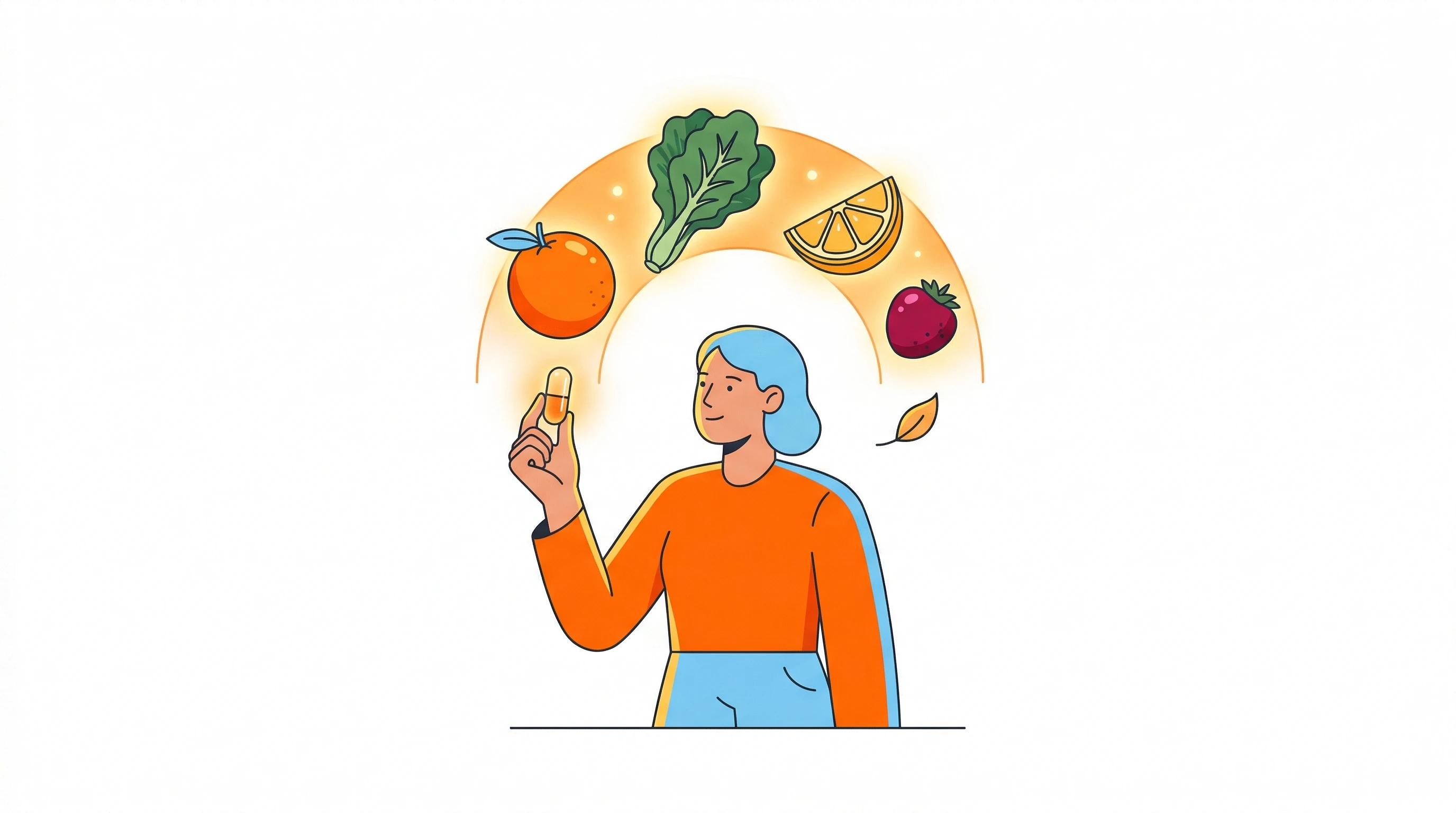
What they cannot do is replicate the fiber, phytochemicals, antioxidants, and complex nutrient interactions found in whole foods. A capsule is not a substitute for an orange, a handful of spinach, or a piece of salmon.
Nutrients vs. Whole Foods
Getting vitamins from a pill is not the same as getting them from food. Whole foods deliver nutrients in combinations that enhance absorption — vitamin C from bell peppers, for example, boosts iron absorption from plant sources in ways a supplement cannot fully replicate.
The Real Multivitamin Benefits — and Who Gets Them
For certain groups, the benefits are well-documented. A 2018 analysis published in Nutrients found that multivitamin use reduced the proportion of adults with intakes below the Estimated Average Requirement for 15 of 17 micronutrients studied. For men over 70, regular MVM use was associated with an 18% reduction in cancer incidence.
The COSMOS-Mind trial — a large randomized controlled trial — found that daily multivitamin supplementation improved global cognition and episodic memory in adults over 60 compared to placebo. This cognitive finding is one of the most compelling recent results in multivitamin research.
Who Genuinely Needs a Multivitamin
Multivitamin benefits are most pronounced in people who have actual nutrient gaps:
| Group | Key Deficiency Risk | Why a Multivitamin Helps |
|---|---|---|
| Adults 50+ | B12, vitamin D, calcium | Stomach acid declines with age, reducing B12 absorption; skin synthesizes less vitamin D |
| Pregnant women | Folate, iron, iodine | Folate prevents neural tube defects; iron supports fetal development |
| Vegans & vegetarians | B12, iron, zinc | These nutrients are concentrated in animal foods and often low in plant-only diets |
| Limited sun exposure | Vitamin D | Sunlight triggers vitamin D synthesis; indoor lifestyles create consistent shortfalls |
| GI conditions (Crohn's, celiac) | Multiple nutrients | Impaired gut absorption affects vitamins and minerals across the board |
| Eating under 1,500 kcal/day | Multiple nutrients | Calorie-restricted diets rarely provide full micronutrient coverage |
For people eating a balanced, varied diet with no absorption issues, the additional benefit is smaller. A 2022 U.S. Preventive Services Task Force review of 84 studies covering roughly 700,000 participants found little or no evidence that multivitamins prevent cancer or cardiovascular disease in healthy, well-nourished adults.
What Multivitamins Will Not Do
It is worth being honest about what the research does not support:
- They are not a substitute for diet quality. The nutrient interactions in whole foods cannot be bottled. Eating more vegetables, whole grains, and lean protein will always do more than a pill. Our guides on high-fiber foods and daily protein requirements are good starting points.
- They do not reliably prevent heart disease or most cancers in otherwise healthy, well-nourished adults.
- They will not compensate for poor sleep, inactivity, or chronic stress — all of which profoundly affect nutrient metabolism and overall health.
- More is not better. Fat-soluble vitamins (A, D, E, K) accumulate in body fat. High-dose supplements — not standard MVMs — can reach toxic levels over time.
How to Choose a Multivitamin Wisely
If a multivitamin makes sense for your situation, here is how to select one:
Nutrient needs also change meaningfully as you age. For a deeper look at the vitamins and minerals that matter most after 50, read our guide on nutrition for healthy aging.
Medical Disclaimer
This article is for informational purposes only and does not constitute medical advice. Speak to your healthcare provider before starting any supplement, especially if you take medications or have a chronic health condition.
Know What You Are Actually Eating First
Before adding a supplement, it helps to understand where your real diet falls short. Most people have no idea how much vitamin D, magnesium, or B12 they consume each day — and they cannot fill a gap they cannot see.
Tracking your meals for even a few weeks reveals patterns you cannot spot otherwise. Caloria makes this effortless: snap a photo of your plate and get an instant breakdown of calories and macronutrients. Over time, you will know far more about your nutritional baseline than any generic supplement label can tell you.
Start Tracking Smarter
Understanding your nutrition is the first step — tracking it consistently is the second. Download Caloria and see what you are really eating:
Frequently Asked Questions
Do multivitamins actually work?
It depends on who is taking them. For people with nutrient gaps — older adults, pregnant women, vegans, or those with digestive conditions — multivitamins can meaningfully close deficiencies. For healthy adults eating a varied diet, disease-prevention evidence is limited. That said, the COSMOS-Mind randomized trial found real cognitive benefits, including improved memory, in adults over 60 taking a daily multivitamin.
Who needs to take a multivitamin?
Multivitamins are most beneficial for pregnant women (especially folate and iron), adults over 50 (B12 and vitamin D), vegans and vegetarians (B12, iron, zinc), people with limited sun exposure, and those with GI conditions that impair nutrient absorption.
What are the benefits of taking a multivitamin daily?
Daily multivitamin use can reduce nutrient deficiencies and support immune function. A 2018 meta-analysis found MVMs improved intake adequacy for 15 of 17 measured micronutrients. The COSMOS-Mind trial showed that adults over 60 who took a daily multivitamin had measurably better global cognition and episodic memory than those taking a placebo.
When is the best time to take a multivitamin?
Take your multivitamin with a meal. Fat-soluble vitamins (A, D, E, K) absorb best alongside dietary fat, and taking the supplement with food generally prevents stomach discomfort. Morning or lunchtime is a practical choice for most people.
Are there risks to taking a multivitamin?
Standard multivitamins at RDA-level doses are safe for most adults. The main risks arise from high-dose supplements, not standard formulas. Fat-soluble vitamins A, D, E, and K can accumulate and become toxic at very high doses over time. Always choose a product with third-party testing and avoid mega-dose formulas unless a healthcare provider has recommended them.