By Dr. Claudia Rivera · Published December 13, 2025 · 9 min read
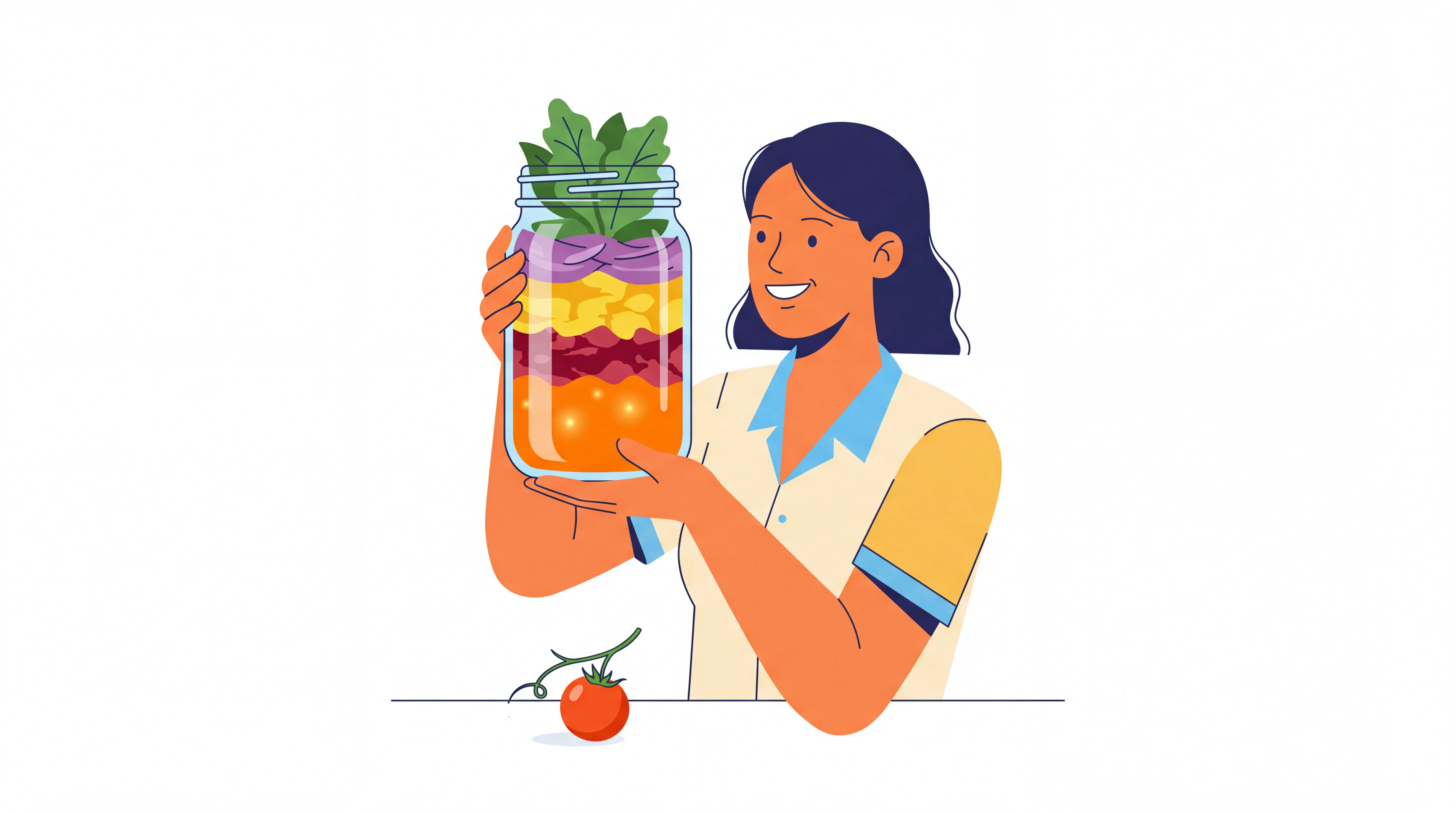
Meal prep salad jars solve the oldest problem with make-ahead lunches: soggy greens. The trick is not the jar — it is the order you build it. Layer the dressing at the bottom, stack dense ingredients above it, and pile the delicate greens on top. When it is time to eat, shake the jar and everything coats perfectly. No wilting. No sad desk lunch.
This guide walks you through the exact 7-layer method used in every recipe below, explains how long each jar stays fresh, and gives you five ready-to-make salads covering high-protein, Mediterranean, and plant-based styles.
Medical Disclaimer
This article is for informational purposes only and does not constitute medical advice. Consult a registered dietitian or healthcare professional before making significant dietary changes, especially if you have a medical condition.
Why Salad Jars Work for Meal Prep
The science behind a salad jar is simple: density gradient. Dense ingredients sink and stay near the dressing; lighter greens float at the top, away from moisture. As long as the jar is stored upright, the greens stay completely dry until you are ready to eat.
Research from Colorado State University Extension notes that salad greens retain the most nutrients and crispness when stored in airtight containers at refrigerator temperatures between 35°F and 40°F (1.7°C to 4.4°C) — exactly what a sealed mason jar provides.
A 2004 study published in Appetite found that eating a low-energy-density salad before a meal reduced total calorie intake by 7 to 12 percent. A jar salad as a complete meal amplifies this effect: the high-fiber vegetables, lean protein, and healthy fat combination promotes satiety with fewer calories than most desk lunches.
For a broader look at how to structure a week of healthy lunches and dinners, see our 30-day weight loss meal plan.
The 7-Layer Salad Jar Method
Every great salad jar follows the same architecture. Here is how the layers break down from bottom to top:
| Layer | What Goes Here | Why This Position |
|---|---|---|
| 1 — Dressing | 2–3 tbsp vinaigrette or oil-based dressing | Stays at the bottom, away from greens |
| 2 — Sturdy grains or beans | Quinoa, chickpeas, brown rice, lentils | Absorbs dressing flavor without going mushy |
| 3 — Dense vegetables | Cucumber, cherry tomatoes, bell peppers, red onion | Acts as a moisture barrier above the dressing |
| 4 — Lighter vegetables | Shredded cabbage, corn, roasted sweet potato | Provides texture and color in the middle |
| 5 — Cheese, nuts, or seeds | Feta, sunflower seeds, almonds, hemp seeds | Stays crunchy away from moisture |
| 6 — Protein | Grilled chicken, hard-boiled eggs, chickpeas, tuna | Keeps moist but does not touch the greens |
| 7 — Greens | Romaine, spinach, kale, arugula, mixed greens | Top layer stays completely dry until shaken |
Building the Jar Step by Step
The Shake Test
Before eating, hold the jar upside down for 10 seconds, then shake vigorously for 5 seconds. Every ingredient should be evenly coated. If greens are still dry, shake for a few more seconds. Then eat straight from the jar or pour into a bowl.
How Long Do Salad Jars Last?
Properly built and stored, most meal prep salad jars last 4 to 5 days in the refrigerator. That means you can batch-prep five jars on Sunday evening and have fresh-tasting lunches through Friday.
Freshness by Ingredient Type
- Greens: Romaine and kale hold up the longest (5 days). Baby spinach wilts faster; use within 3 days.
- Cooked proteins: Grilled chicken, hard-boiled eggs, and cooked shrimp stay good for 4 days.
- Grains and legumes: Quinoa, brown rice, and chickpeas keep for 5 days without quality loss.
- Raw vegetables: Cucumbers, tomatoes, and peppers hold well for 5 days when kept dry.
- Avoid prepping: Avocado, croutons, fresh herbs, and soft berries should be added day-of.
Always store jars upright — the moment the jar tips sideways, dressing migrates toward the greens. If your fridge does not have room for tall jars, lay them on their side only after the dense ingredients have fully absorbed the dressing (after the first day).
Choosing the Right Jar and Equipment
The container matters. A wide-mouth jar allows you to pack layers efficiently and eat directly from it without struggling to reach the bottom.
Recommended Equipment
32-oz wide-mouth mason jars — the standard for full meal salads. Holds roughly 400–500 calories worth of ingredients comfortably.
16-oz wide-mouth jars — good for side salads or lighter portions (250–300 calories).
Plastic lids — BPA-free plastic lids are easier to open than metal bands and last longer for daily use.
Small leak-proof containers — useful for dressings if you prefer to add them the day of eating.
5 Meal Prep Salad Jar Recipes
Each recipe fills one 32-oz jar and serves one person. All nutrition estimates assume the full jar is eaten. Prep time for all five jars together: approximately 45 minutes.
1. High-Protein Chicken Caesar (430 kcal)
Dressing: 2 tbsp light Caesar dressing Layer 2: ½ cup cooked white beans Layer 3: 1 cup cherry tomatoes, halved Layer 4: ¼ cup shaved parmesan Layer 6: 140g grilled chicken breast, sliced Layer 7: 2 cups chopped romaine lettuce
Macros: 43g protein, 28g carbs, 14g fat
2. Mediterranean Quinoa Jar (470 kcal)
Dressing: 2 tbsp lemon-herb vinaigrette Layer 2: ½ cup cooked quinoa Layer 3: ½ cup diced cucumber, ½ cup cherry tomatoes, 2 tbsp sliced red onion Layer 5: 30g crumbled feta, 10 kalamata olives Layer 6: 100g canned chickpeas, rinsed Layer 7: 2 cups baby spinach + arugula mix
Macros: 22g protein, 48g carbs, 18g fat
3. Asian Sesame Crunch Jar (410 kcal)
Dressing: 2 tbsp sesame ginger dressing Layer 2: ½ cup edamame (shelled) Layer 3: ½ cup shredded purple cabbage, ½ cup shredded carrots, ½ cup sliced bell pepper Layer 5: 2 tbsp sunflower seeds, 1 tbsp sesame seeds Layer 6: 100g cooked shrimp Layer 7: 2 cups shredded romaine + kale
Macros: 32g protein, 30g carbs, 17g fat
4. Southwest Black Bean Jar (450 kcal)
Dressing: 2 tbsp lime vinaigrette Layer 2: ½ cup cooked brown rice Layer 3: ½ cup black beans, ½ cup corn, ½ cup diced bell pepper Layer 5: 30g shredded cheddar Layer 6: 100g seasoned ground turkey (cooked) Layer 7: 2 cups chopped romaine
Macros: 36g protein, 44g carbs, 15g fat
5. Greek Salad Jar — Vegetarian (380 kcal)
Dressing: 2 tbsp Greek dressing Layer 2: ½ cup cooked lentils Layer 3: ½ cup diced cucumber, ½ cup cherry tomatoes, ¼ cup diced red onion Layer 5: 40g crumbled feta, 10 kalamata olives, 1 tbsp pine nuts Layer 6: 80g roasted red peppers Layer 7: 2 cups baby spinach
Macros: 18g protein, 35g carbs, 19g fat
Recipe Nutrition Comparison
| Recipe | Calories | Protein | Carbs | Fat |
|---|---|---|---|---|
| Chicken Caesar | 430 kcal | 43g | 28g | 14g |
| Mediterranean Quinoa | 470 kcal | 22g | 48g | 18g |
| Asian Sesame Crunch | 410 kcal | 32g | 30g | 17g |
| Southwest Black Bean | 450 kcal | 36g | 44g | 15g |
| Greek Salad (Vegetarian) | 380 kcal | 18g | 35g | 19g |
The Chicken Caesar and Southwest Black Bean jars are the best options for anyone focused on high-protein meal prep. For plant-based eating, the Mediterranean Quinoa and Greek Salad jars provide complete protein through grain-legume combinations. For more ideas on building calorie-controlled lunches and dinners, explore our list of calorie deficit meals under 500 calories.
Tips for a Faster Prep Session
Batch prepping five jars at once is faster than prepping one jar five times. Here is how to streamline it:
- Cook all grains and proteins first — while quinoa or rice simmers, grill or bake your proteins. This is the longest step, so start here.
- Chop all vegetables at once — line up your five jars and add each vegetable layer assembly-line style.
- Pre-measure dressings — pour dressing into all five jars before moving to the next layer. Repeat for every layer.
- Add greens last — pack greens down firmly so the lid closes cleanly.
- Label and date each jar — a small piece of masking tape with the recipe name and day keeps the fridge organized.
Most people can prep five jars in 45 to 60 minutes. Getting organized around your fiber intake helps — our high-fiber foods list has great ideas for extra vegetables and legumes to rotate into these recipes.
Tracking Your Salad Jar Nutrition
Salad jars make calorie tracking straightforward because you build the entire meal yourself from measured ingredients. If you want to verify your macros accurately, Caloria — the AI calorie tracker — lets you photograph your finished jar and get an instant calorie and macro estimate without manual data entry.
This is especially useful if you adjust the recipes to different portion sizes or swap ingredients week to week.
Start Building Your Salad Jar Routine
Meal prep salad jars are one of the most efficient lunches you can make. Five minutes of layering on Sunday means five healthy, ready-to-eat meals waiting in the fridge. The key is always the same: dressing first, greens last.
If you want a full week of structured eating around these jars, check out our 7-day diet plan for weight loss for a complete framework that pairs well with salad jar lunches.
Download Caloria and track your meals effortlessly — just snap a photo of your salad jar and get your nutritional breakdown in seconds:
Frequently Asked Questions
How do you keep salad jars from getting soggy?
Always put the dressing at the very bottom of the jar, then build upward with dense ingredients before adding greens on top. The dense vegetables and grains in the middle act as a physical barrier, keeping moisture away from the leafy greens until you shake the jar right before eating.
How long do meal prep salad jars last in the fridge?
A well-layered salad jar stays fresh for 4 to 5 days when stored upright and sealed. Romaine and kale last longest; baby spinach should be eaten within 3 days. Skip avocado and croutons when prepping in advance — add them the day you plan to eat.
What size mason jar is best for a meal salad?
A 32-ounce wide-mouth mason jar fits a full meal (roughly 400 to 500 calories) and is easy to layer and eat from. Smaller 16-ounce jars work for side salads or lighter options. Wide-mouth openings are essential — narrow-mouth jars make both packing and eating unnecessarily difficult.
Can you add warm ingredients to a salad jar?
Yes, but let them cool completely first. Adding warm grains, roasted vegetables, or freshly cooked proteins while hot creates steam that wilts the greens and breaks down the dressing. Cool all cooked ingredients to room temperature before assembling.
Which greens hold up best for 5-day meal prep?
Romaine lettuce and chopped kale are the most durable, staying crisp for a full 5 days when kept dry at the top of the jar. Arugula and mixed spring greens last 3 to 4 days. Baby spinach is the most delicate — best used in jars you plan to eat within 2 to 3 days.