By Dr. Lisa Valente · Published December 10, 2025 · 10 min read
Meal prep for beginners can feel overwhelming at first glance — an entire week's worth of food, cooked in one session, stored in neat containers. But the reality is far simpler. At its core, meal prep is just cooking ahead so your future self has less to think about. This guide walks you through every step, from your first grocery list to stacking your fridge with a week's worth of ready-to-eat meals.
Medical Disclaimer
This article is for informational purposes only and does not constitute medical advice. Consult a registered dietitian or healthcare professional before making significant dietary changes, especially if you have a medical condition, are pregnant, or are taking medications.
What Is Meal Prep and Why It Works
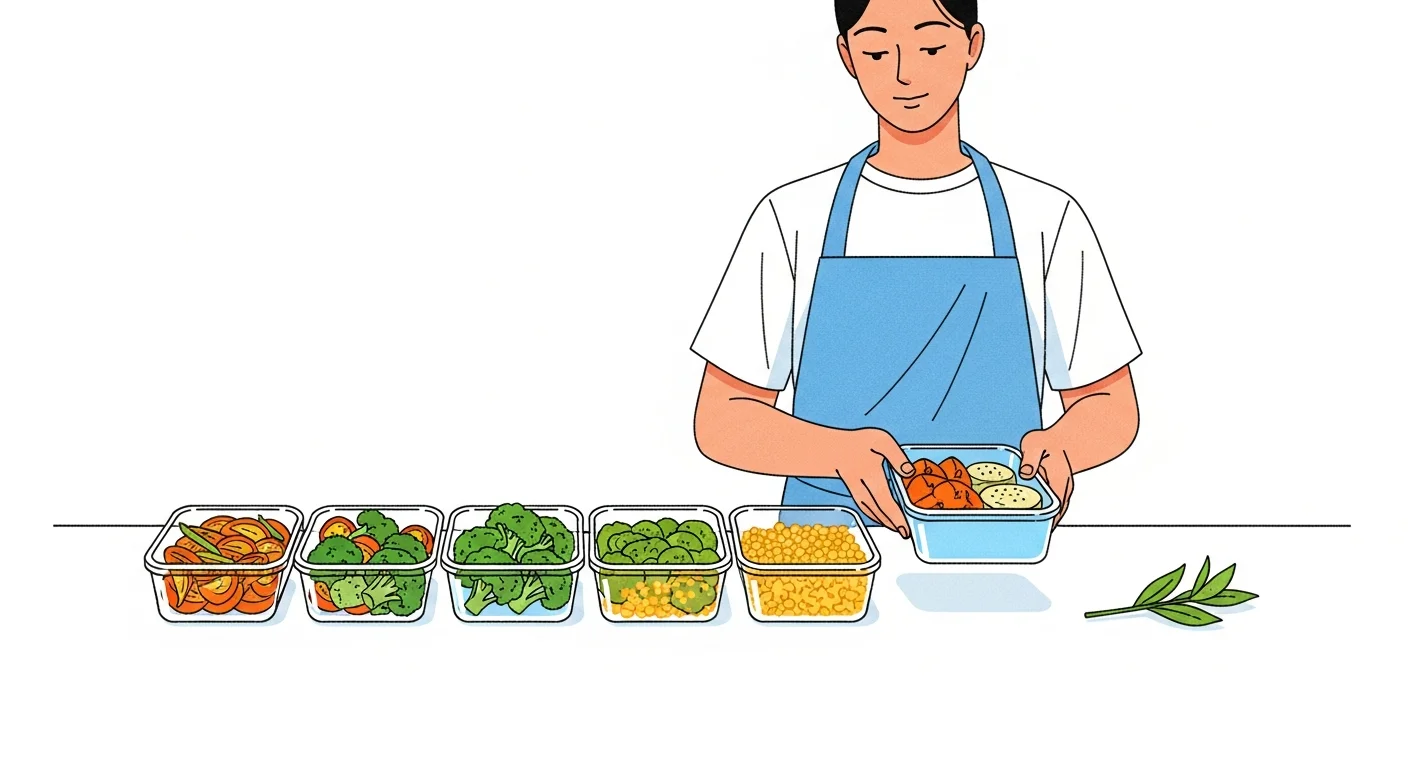
Meal prepping means preparing food in advance — cooking proteins, roasting vegetables, portioning grains, or assembling full meals — so you have ready-to-eat options on hand throughout the week without cooking from scratch every day.
The science supports the habit. A 2017 study of more than 40,000 adults published in the International Journal of Behavioral Nutrition and Physical Activity found that people who planned their meals in advance had significantly better diet quality, greater food variety, and lower rates of overweight and obesity compared to those who did not plan. Meal planning was also linked to more frequent home cooking — itself a strong predictor of healthier eating patterns.
Practically speaking, meal prep works because it eliminates the daily question of "what do I eat?" When hunger strikes, the answer is already in your fridge.
What You Need Before You Start
You do not need a restaurant kitchen or expensive equipment. A beginner's meal prep setup requires:
- Airtight containers — glass or BPA-free plastic in a variety of sizes. Rectangular containers stack efficiently; 2-cup and 4-cup sizes cover most meals and snacks.
- A sheet pan — for roasting vegetables and proteins simultaneously.
- A large pot — for batch-cooking grains, soups, or legumes.
- A skillet — for stovetop proteins.
- A kitchen scale — optional but helpful for understanding portion sizes and tracking nutrition accurately.
That is genuinely all you need to get started. The containers are the most important investment — quality lids prevent leaks and keep food fresh longer.
Step 1: Plan Your Meals for the Week
Start by choosing which meals you want to prep. Most beginners do best by prepping lunches and snacks first, then adding dinners once the routine feels natural.
How to plan:
- Look at your week — how many meals do you need? Count breakfasts, lunches, dinners, and snacks for each day you will use prepped food.
- Choose 2-3 proteins, 2-3 vegetables, and 1-2 grains that can mix and match into different meals. This "building block" approach creates variety without extra work.
- Check what you already have in your pantry before building your grocery list.
- Keep it simple. Your first prep session should use recipes you know, not ones that require new techniques.
The Building Block Method
One batch of grilled chicken, one pot of quinoa, and one tray of roasted vegetables can become a salad bowl for lunch, a grain bowl for dinner, and a wrap for Thursday — three different meals from one prep session.
For inspiration on how a week of meals can look, our 7-day diet plan for weight loss shows a complete weekly framework you can use as a template.
Step 2: Build a Smart Grocery List
A focused grocery list is the difference between an efficient prep session and a frustrating one. Organize your list by store section:
- Produce — vegetables and fruits you plan to roast, steam, or eat raw.
- Protein — chicken, fish, eggs, Greek yogurt, tofu, canned legumes.
- Grains — oats, rice, quinoa, whole grain bread.
- Pantry — olive oil, low-sodium broth, canned tomatoes, herbs, and spices.
Buy in bulk where it makes sense. A large bag of oats, a bag of rice, and a container of olive oil cost far less per serving than their smaller counterparts and form the backbone of weeks of prep.
Beginner Starter Grocery List
Proteins: chicken breasts (500–700g), eggs (1 dozen), Greek yogurt (2 tubs), canned chickpeas or lentils (2 cans)
Vegetables: broccoli, spinach, bell peppers, sweet potato, zucchini
Grains: rolled oats (500g), brown rice or quinoa (500g)
Healthy fats: olive oil, avocados, a small bag of almonds or walnuts
Pantry staples: low-sodium soy sauce, garlic, lemon, mixed herbs and spices
Step 3: Set Up Your Kitchen
Before you cook a single thing, spend 10 minutes setting up:
Setting up before you cook saves more time than any other single habit. It also reduces the mental friction that causes people to give up mid-session.
Step 4: Cook Everything in Batches
This is the main event. The secret to efficient batch cooking is parallel processing — running multiple cooking tasks at the same time instead of sequentially.
A typical beginner session might look like this:
- Start the grains — brown rice or quinoa takes 25-30 minutes. Get it on the stove first.
- Season and put proteins in the oven — chicken breasts or salmon fillets roast in 20-25 minutes. Put them in alongside the vegetables.
- Roast vegetables — cut into similar-sized pieces for even cooking. Broccoli, sweet potato, and zucchini all roast at the same temperature.
- Prep cold items — while the hot items cook, wash salad greens, portion yogurt and nuts, and hard-boil eggs if using them.
- Portion as things finish — let cooked food cool for 5-10 minutes, then divide into containers.
By running these steps in parallel, a full week of prep takes 2-3 hours, not an entire afternoon.
Step 5: Store and Label Correctly
Proper storage is what makes your prep week safe and practical.
- Cool before sealing — sealing hot food traps steam, creating condensation that speeds spoilage and makes food soggy.
- Label every container with the contents and prep date. A simple piece of masking tape and a marker costs almost nothing.
- Refrigerate meals you will eat within 3-5 days. The Harvard T.H. Chan School of Public Health's Nutrition Source recommends using refrigerated prepped meals within 3-4 days for best safety and quality.
- Freeze the rest. Proteins and grain-based meals freeze well for up to 3 months. Thaw overnight in the refrigerator before reheating.
Best Foods to Meal Prep as a Beginner
Not everything preps equally well. Here is how common beginner-friendly foods compare across the key factors:
| Food | Prep Time | Fridge Life | Freezer? | Versatility |
|---|---|---|---|---|
| Brown rice / quinoa | 25-30 min | 5 days | Yes | High — bowls, wraps, sides |
| Rolled oats (overnight) | 5 min | 5 days | No | Medium — breakfast only |
| Roasted chicken breast | 25 min | 4 days | Yes | High — salads, wraps, bowls |
| Hard-boiled eggs | 12 min | 7 days | No | Medium — snacks, salads |
| Roasted vegetables | 25 min | 4 days | Yes (texture changes) | High — sides, bowls, soups |
| Canned legumes (rinsed) | 0 min | 5 days | Yes | High — salads, bowls, curries |
| Greek yogurt (portioned) | 2 min | 5-7 days | No | Medium — breakfast, snacks |
Start with the high-versatility, long-shelf-life items. Rice or quinoa plus roasted chicken and vegetables is the classic beginner combination for good reason — it can become five different meals with just a change of sauce or seasoning.
Common Beginner Mistakes to Avoid
Even with the best intentions, beginners often hit the same avoidable obstacles:
1. Trying to prep everything at once. Prepping all three meals, seven days a week, for a household of four on your first attempt almost always leads to overwhelm. Start with one meal per day for three or four days.
2. Choosing recipes that are too complex. Save new, elaborate recipes for weekends when you cook fresh. Meal prep is not the time to attempt something you have never made before.
3. Not accounting for calorie balance. Meal prep without any awareness of portions can lead to unknowingly eating more or less than your goal. Even a rough understanding of how many calories you should eat per day makes your prep far more effective.
4. Skipping the label step. Unlabeled containers lead to food waste. A date on every container takes five seconds and prevents throwing away perfectly good food out of uncertainty.
5. Prepping food you do not actually like. Meal prep only works if you want to eat what is in the containers. Build your prep around your genuine food preferences, not an idealized diet you think you should be following.
For a deeper look at making healthy eating sustainable long-term, our guide on food tracking tips covers the behavioral side of staying consistent.
Track What You Prep with Caloria
Meal prep and nutrition tracking work best together. Once you know what is in each container, tracking it becomes simple — and tracking is what turns a week of good intentions into measurable progress.
Caloria, the AI calorie tracker, makes this effortless. Snap a photo of your prepped meal and get an instant calorie and macro breakdown — no manual entry, no database searching. Just point your camera at your container and see exactly what you are eating.
Start Tracking Smarter
Meal prep gives you the structure. Tracking gives you the insight. Together, they create a loop of awareness that makes healthy eating feel manageable rather than exhausting.
Download Caloria and track every meal from your prep session in seconds:
Frequently Asked Questions
How do I start meal prepping as a beginner?
Start small: choose two or three meals to prep, select simple recipes that share ingredients, build a grocery list, and block out two to three hours on a weekend day. Cook proteins and grains in bulk, portion into airtight containers, and refrigerate. Treat your first session as a practice run — the routine gets faster every week. Our calorie deficit meal plan is a good starting template if your goal is weight loss.
How long does meal prep food last in the fridge?
Most cooked proteins, grains, and roasted vegetables keep safely in the refrigerator for three to five days in airtight containers. Label every container with the prep date so you always know what to eat first. Foods you will not reach within five days should be frozen in individual portions and thawed overnight in the fridge before eating.
What foods are easiest to meal prep as a beginner?
The easiest foods are batch-cooked grains (brown rice, quinoa, oats), roasted vegetables (broccoli, sweet potato, zucchini), and simple proteins (chicken breast, boiled eggs, canned legumes). These store well, reheat quickly, and mix into dozens of different meal combinations. They are also forgiving — slightly overcooked rice is still perfectly usable in a bowl.
How many hours does weekly meal prep take?
Most beginners finish a full week's prep in two to three hours. With experience, this drops to 60-90 minutes as parallel cooking becomes second nature. The time investment front-loads your week, saving 20-30 minutes of daily cooking and decision-making every day it runs.
Can meal prep help with weight loss?
Yes. Research published in the International Journal of Behavioral Nutrition and Physical Activity found that meal planning was significantly associated with better diet quality and lower rates of overweight and obesity. Having nutritious, portion-appropriate meals ready removes the daily decision points where unplanned, higher-calorie choices tend to happen. For a structured approach to meal prep designed for weight loss, see our calorie deficit meal plan.