By Dr. Dave Patel · Published October 4, 2025 · 11 min read
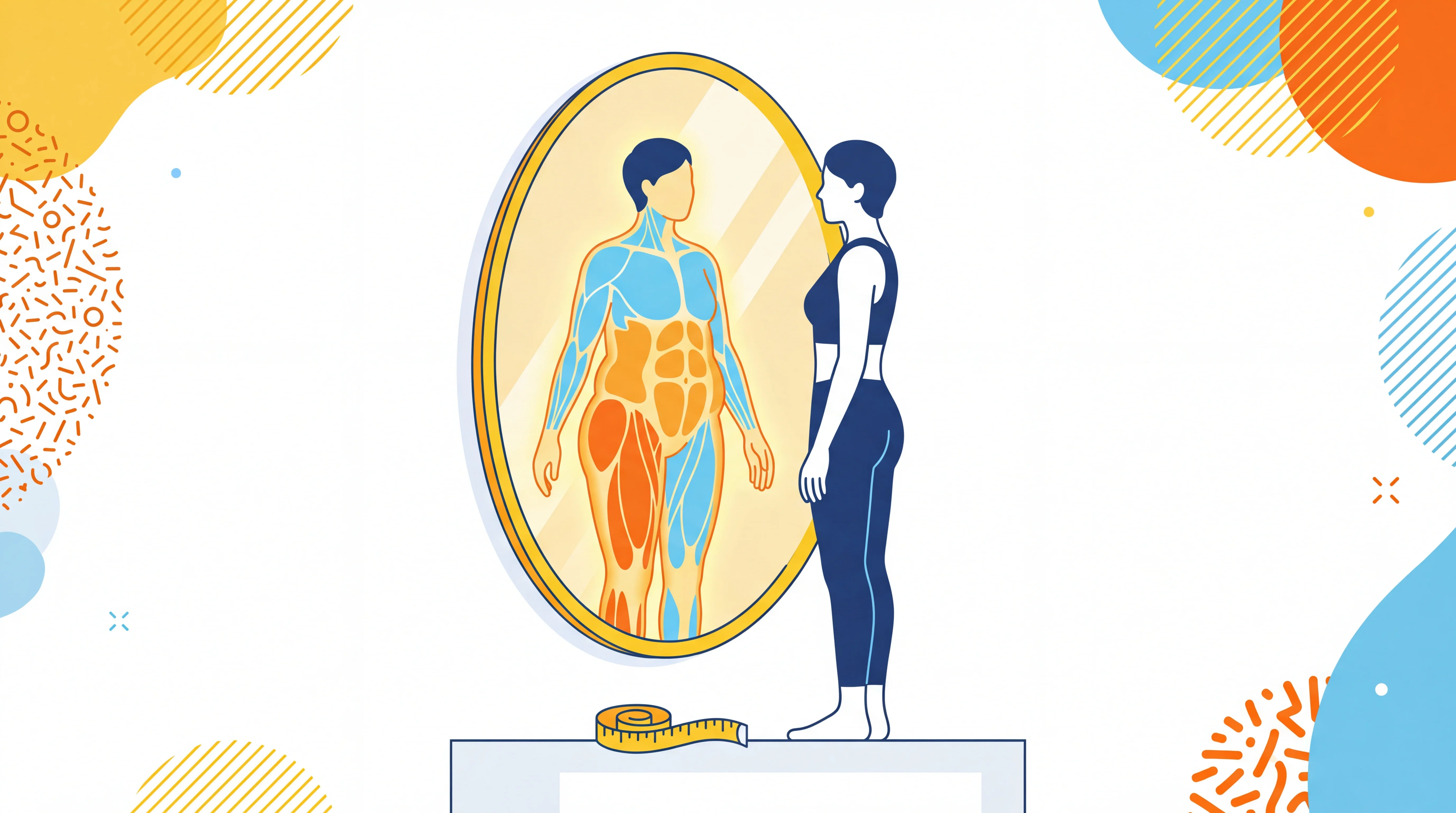
How to calculate body fat percentage is one of the most practical questions in fitness and nutrition — and one of the most misunderstood. Your scale tells you how much you weigh. It does not tell you how much of that weight is fat, muscle, bone, or water. That distinction matters enormously for your health and your goals.
A 2025 study published in the Annals of Family Medicine found that BMI — the measurement most doctors still rely on — had no statistically significant association with 15-year mortality risk. Body fat percentage measured by BIA, however, was strongly predictive: people with high body fat were 78% more likely to die of any cause and roughly 3.5 times more likely to die of cardiovascular disease than those with healthy body fat levels.
This guide covers four methods for calculating body fat percentage — ranging from completely free to clinical-grade — so you can choose the right one for your situation.
Why Body Fat Percentage Beats Weight Alone
Your total body weight includes fat mass, lean mass (muscle, organs, connective tissue), bone mineral, and water. Two people can weigh exactly the same and have radically different health risks depending on how that weight is distributed between fat and lean tissue.
Normal-weight obesity — having a healthy BMI but excess body fat — affects a significant portion of the population. Someone with very little muscle can have a "normal" BMI while carrying enough fat to increase metabolic disease risk. Conversely, an athlete or bodybuilder can have an "overweight" BMI while carrying very little body fat.
Body fat percentage eliminates this ambiguity. It gives you a direct measure of your body composition — the single number most closely tied to health outcomes and the one most relevant to any fat-loss or muscle-building goal.
Method 1: US Navy Circumference Method (Free)
Best for: Anyone who wants a free, reasonably accurate estimate at home. Accuracy: ±3–4% for most adults. Equipment: A flexible tape measure.
The US Navy has used this formula for military fitness assessments for decades. It requires only body measurements — no equipment beyond a basic tape measure. All measurements should be taken in inches.
How to Measure (Men)
Formula (men):
% Body Fat = 86.010 × log10(waist − neck) − 70.041 × log10(height) + 36.76
Worked example: Man, 5'10" (70 inches), waist 34 inches, neck 15 inches:
86.010 × log10(34 − 15) − 70.041 × log10(70) + 36.76
= 86.010 × 1.279 − 70.041 × 1.845 + 36.76
= 110.0 − 129.2 + 36.76
≈ 17.6% body fat
How to Measure (Women)
Formula (women):
% Body Fat = 163.205 × log10(waist + hip − neck) − 97.684 × log10(height) − 78.387
Measurement Tips
Use the tape snugly but not compressing the skin. Take each measurement twice and use the average. Measure at the same time of day — morning, before eating — for the most consistent results.
Method 2: Skinfold Calipers
Best for: Regular progress tracking with moderate accuracy; gym environments. Accuracy: ±3–3.5% (trained technician); ±5–7% (self-measurement). Equipment: Skinfold calipers ($10–$30 for basic; $200+ for professional Harpenden calipers).
Skinfold calipers pinch folds of subcutaneous fat at specific anatomical sites and measure their thickness in millimetres. These measurements are then entered into a validated formula — most commonly the Jackson-Pollock 3-site or 7-site equation — to estimate overall body density, which is converted to body fat percentage using the Siri equation.
3-Site Protocol
Men — measure at:
- Chest — diagonal fold, halfway between the nipple and anterior axillary fold
- Abdomen — vertical fold, 2 cm to the right of the navel
- Thigh — vertical fold, anterior midline of the thigh
Women — measure at:
- Tricep — vertical fold, midpoint of the upper arm
- Suprailiac — diagonal fold, just above the iliac crest
- Thigh — same as men
Add all three skinfold measurements (in mm). Use the Jackson-Pollock formula for your sex and age group, then convert body density to fat percentage with the Siri equation: % BF = (495 ÷ Body Density) − 450.
The key limitation: accuracy depends heavily on the technician's skill and consistent site identification. A 2022 study in PMC comparing skinfold, BIA, and DEXA found that skinfold underestimated body fat by approximately 6 percentage points versus DEXA in male athletes — a meaningful gap if you are making clinical or competition decisions.
Method 3: Bioelectrical Impedance Analysis (BIA)
Best for: Convenient trend tracking at home; not for precise single measurements. Accuracy: Highly variable; commonly underestimates body fat by 5–10 percentage points vs. DEXA. Equipment: BIA smart scale ($25–$100 consumer; $1,000+ for 8-electrode professional units).
BIA sends a low-level electrical current through the body. Fat tissue resists electricity more than muscle or water, so the device estimates body composition based on how much the current is impeded.
Consumer BIA scales (the kind most people own) are fast and convenient, but their accuracy is substantially affected by hydration status, recent exercise, food intake, and time of day. The same 2022 PMC study found that BIA underestimated body fat by approximately 10 percentage points versus DEXA in trained male athletes.
For the most consistent BIA readings:
- Test in the morning, before eating or drinking
- Avoid exercise for 12 hours before measuring
- Ensure consistent hydration (avoid measuring after alcohol, high-sodium meals, or illness)
- Use the same scale, at the same time of day, every time
BIA is best used for tracking trends rather than for absolute accuracy. If your BIA scale consistently reads 20%, and six months later it reads 17%, that downward trend is meaningful — even if the absolute number is off.
Method 4: DEXA Scan
Best for: The most accurate accessible measurement; body composition research; annual check-ins. Accuracy: ±1–2% at population level; ±4–10% at individual level vs. 4-compartment model. Cost: $40–$200 per scan at medical or sports performance facilities.
DEXA (dual-energy X-ray absorptiometry) uses two low-dose X-ray beams at different energy levels to differentiate fat mass, lean mass, and bone mineral density across your entire body. It is the gold standard in clinical body composition research and provides regional breakdowns (arms, legs, trunk, android/gynoid fat distribution).
A single DEXA scan gives you:
- Total body fat percentage
- Total lean mass
- Bone mineral density
- Regional fat distribution (android vs. gynoid fat — the clinically relevant split)
The main practical limitation is access — you need to book an appointment at a facility with a DEXA machine, which is typically found at hospital radiology departments, sports medicine clinics, or dedicated body composition studios.
Hydrostatic Weighing (Bonus Method)
If DEXA is unavailable, hydrostatic (underwater) weighing is comparably accurate (±1.5–2%). You are weighed on land and then fully submerged in water; the difference in buoyancy reveals body density. Fat is less dense than water, so more fat = more buoyancy. Available at university exercise science labs and some sports facilities, typically at $40–$100 per session.
Method Comparison: Which Is Right for You?
| Method | Accuracy | Cost | Equipment | Best Use Case |
|---|---|---|---|---|
| Navy Circumference | ±3–4% | Free | Tape measure | Quick at-home estimate |
| Skinfold Calipers | ±3–3.5% (trained) | $10–$30 | Calipers | Regular gym tracking |
| BIA Smart Scale | ±5–10% vs DEXA | $25–$100 | Smart scale | Trend tracking at home |
| DEXA Scan | ±1–2% | $40–$200/scan | Clinic appointment | Accurate baseline or annual check |
| Hydrostatic Weighing | ±1.5–2% | $40–$100/session | Lab appointment | Accurate, no radiation |
Consistency Beats Precision
For ongoing progress tracking, method consistency matters more than absolute accuracy. Choose one method and stick with it. A 3-month change measured on the same BIA scale is far more meaningful than switching between methods — each will give a different absolute number, making comparisons impossible.
Healthy Body Fat Percentage Ranges
Healthy body fat percentage ranges differ by sex, and shift upward with age. Women require more essential fat — approximately 10–13% — to support hormonal function and reproductive health. Men require only 2–5% essential fat. Going below essential fat thresholds is clinically dangerous and associated with serious hormonal and metabolic disruption.
| Category | Men | Women |
|---|---|---|
| Essential Fat (minimum safe) | 2–5% | 10–13% |
| Athletes | 6–13% | 14–20% |
| Fitness | 14–17% | 21–24% |
| Acceptable / Healthy | 18–24% | 25–31% |
| Obese | 25%+ | 32%+ |
These ranges come from the American Council on Exercise (ACE) classification system and are the most widely cited in fitness and clinical practice. Note that healthy ranges shift with age — a 50-year-old at 22% body fat is in a different percentile than a 25-year-old at the same number. Most age-adjusted charts add roughly 1–2 percentage points per decade.
What Body Fat Percentage Looks Like
Visual cues are approximate and vary significantly by muscle mass, genetics, and fat distribution:
- Men at 10–13%: Lean and athletic, visible ab definition, some vascularity
- Men at 14–17%: Fit, faint upper ab definition, athletic appearance
- Men at 18–24%: Average, soft mid-section, limited muscle definition
- Women at 14–20%: Athletic and toned, visible ab definition
- Women at 21–24%: Fit, healthy appearance, minimal definition
- Women at 25–31%: Average healthy range, full soft tissue
How to Improve Your Body Fat Percentage
Reducing body fat percentage comes down to two levers: creating a calorie deficit and preserving or building lean mass. Both matter equally.
A calorie deficit causes your body to draw energy from stored fat — but without sufficient protein intake and resistance training, it will also break down muscle tissue, which reduces your lean mass and lowers your metabolic rate. The goal is to lose fat while keeping lean mass as stable as possible.
Key evidence-based strategies:
-
Maintain a moderate calorie deficit — 300–500 kcal/day produces consistent fat loss without triggering adaptive thermogenesis or significant muscle loss. Learn how to set yours with our guide on how to start a calorie deficit.
-
Prioritize protein — consuming 1.6–2.2 g of protein per kilogram of body weight per day is strongly supported by research as the threshold for preserving muscle during a deficit. See our guide on daily protein requirements for individual targets.
-
Include resistance training — lifting weights 2–4 times per week sends a muscle-retention signal, making the body preferentially oxidize fat rather than protein during a deficit.
-
Track your intake accurately — underestimating calories is the most common reason fat loss stalls. For a complete guide to accurate tracking, read our article on how to track calories effectively.
If you hit a plateau after consistent effort, our guide on calorie deficit plateaus covers the most common causes and evidence-based solutions.
Frequently Asked Questions
What is a healthy body fat percentage?
For men, the healthy (acceptable) range is 18–24%; for women, 25–31%. Athletes typically fall between 6–13% (men) and 14–20% (women). These ranges shift upward with age.
Is BMI or body fat percentage more useful?
For health risk assessment, body fat percentage is more informative than BMI. BMI cannot distinguish fat from muscle — a muscular athlete and a sedentary person can share the same BMI. A 2025 study in Annals of Family Medicine found BMI had no significant association with 15-year mortality, while directly measured body fat was strongly predictive.
How often should I measure my body fat?
Once per month is sufficient for most people tracking progress. More frequent measurements add noise rather than signal — daily fluctuations in hydration and digestion can swing BIA readings by 2–3 percentage points. For DEXA or hydrostatic weighing, every 3–6 months is a reasonable interval.
Can I measure body fat at home accurately?
The Navy Circumference Method is the most reliable free option, with ±3–4% accuracy — comparable to skinfold calipers. A BIA smart scale used consistently (same time, same conditions) is practical for trend tracking despite its absolute accuracy limitations.
Does age affect healthy body fat percentage?
Yes. Body fat percentage naturally increases slightly with age due to hormonal changes and a gradual reduction in muscle mass (sarcopenia). Most age-adjusted reference charts add roughly 1–2 percentage points per decade, so a 55-year-old man at 22% body fat is within a normal range, while the same percentage would be borderline acceptable at age 25.
Start Tracking What Actually Matters
Knowing your body fat percentage is the first step. The second — and harder — step is understanding what you eat well enough to actually move the number over time. Most people underestimate their calorie intake by 20–40%, which explains why fat loss often stalls despite genuine effort.
Caloria, the AI calorie tracker, closes that gap: snap a photo of your meal and get an instant calorie and macronutrient breakdown — no manual entry, no guesswork. Pair it with regular body fat measurements and you have a data-driven system for improving body composition.
Download Caloria and see exactly what you're eating:
Medical Disclaimer
This article is for informational purposes only and does not constitute medical advice. Body fat percentage targets and calorie recommendations are general guidelines. Consult a registered dietitian, sports nutritionist, or healthcare professional before making significant dietary or exercise changes, particularly if you have a medical condition.