By Dr. Rachel Kim · Published September 30, 2024 · 8 min read
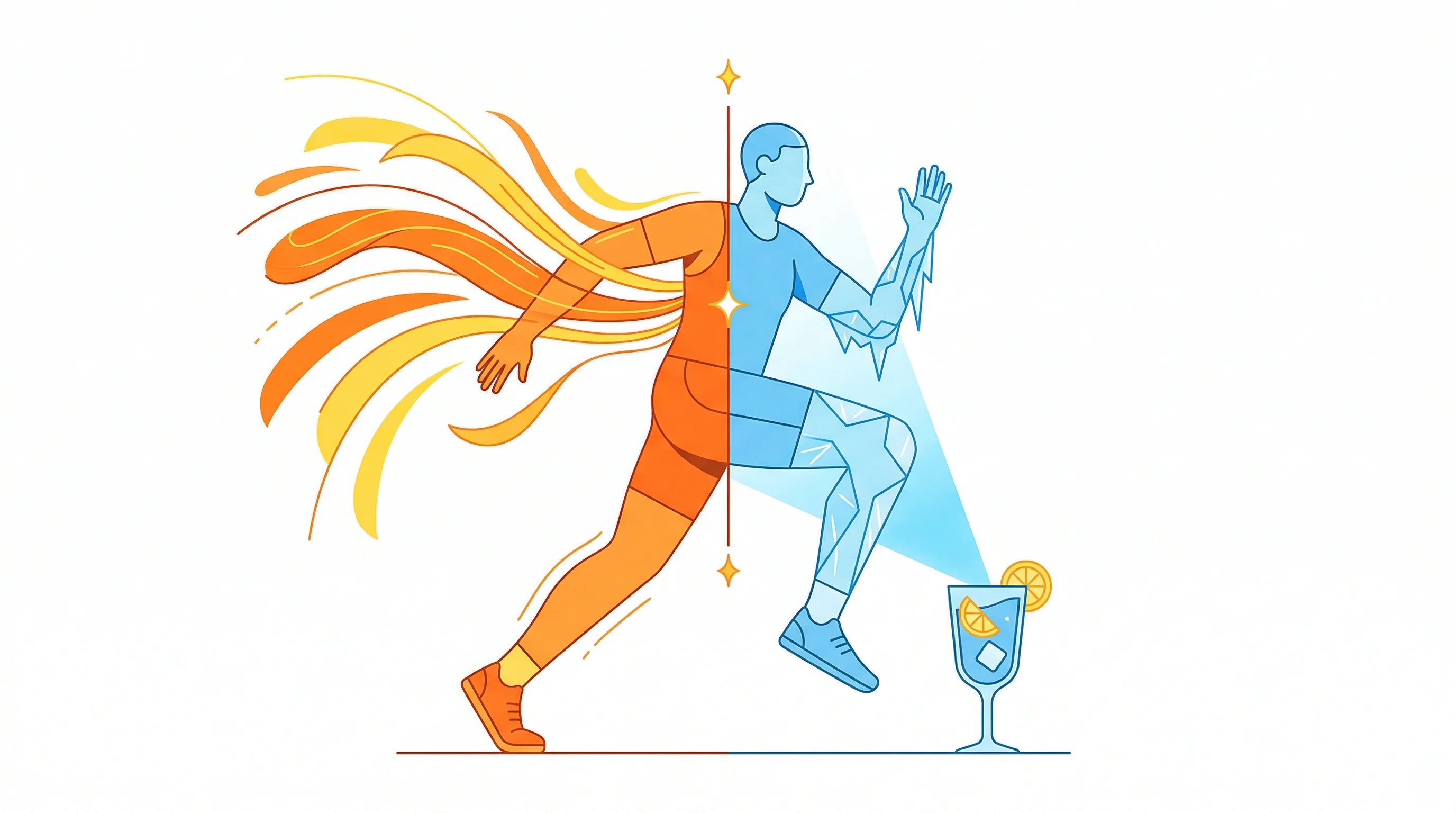
Does alcohol stop fat burning? The short answer is yes — temporarily but significantly. Research published in the American Journal of Clinical Nutrition found that a single moderate dose of alcohol reduced whole-body fat oxidation by 73%. Your liver treats alcohol as a metabolic priority, and everything else — including fat breakdown — gets put on hold.
That doesn't mean one drink destroys your progress. But understanding how alcohol disrupts fat metabolism helps you make smarter choices, whether you're actively losing weight or simply trying to maintain a balanced diet.
The Myth: "A Drink or Two Won't Affect My Diet"
This is the most common misconception about alcohol and weight management. Many people assume that if a glass of wine fits within their daily calorie budget, it's metabolically neutral. It isn't.
Alcohol is not processed like other macronutrients. When you eat protein, carbs, or fat, your body can store, burn, or convert them flexibly. Alcohol, however, is treated as a toxin. Your liver drops everything to metabolize it — and that metabolic priority shift is what pauses fat burning.
Key Distinction
Alcohol doesn't make you gain fat directly. It pauses the process of burning fat, which means the food you eat alongside your drinks is more likely to be stored rather than used for energy.
How Alcohol Disrupts Fat Metabolism
When you take a drink, your liver converts ethanol into acetaldehyde, then into acetate. Acetate floods the bloodstream and becomes your body's preferred fuel source — displacing fatty acids and glucose.
Here is what happens step by step:
- Liver priority shift — Your liver stops oxidizing fat and switches to clearing alcohol. A landmark study in the Journal of Clinical Investigation showed that ethanol reduced fat oxidation by 79% in healthy adults.
- Lipolysis suppression — The release of fatty acids from your fat stores drops by roughly 53%, according to research by Siler et al. (1999).
- Insulin spike — Alcohol triggers increased insulin secretion, which further blocks fat breakdown and promotes storage.
- Cortisol rise — Alcohol elevates cortisol for up to 24 hours, encouraging visceral fat storage — especially around the midsection.
The net result: your body burns alcohol first, stores more of the food you eat as fat, and your hormonal environment shifts against fat loss.
How Long Does Alcohol Stop Fat Burning?
The duration depends on how much you drink. Your liver processes roughly one standard drink per hour, but the metabolic aftereffects extend well beyond clearance.
| Scenario | Fat Oxidation Suppressed | Full Metabolic Recovery |
|---|---|---|
| 1 standard drink | 4–8 hours | ~12–16 hours |
| 2–3 drinks | 8–16 hours | ~18–24 hours |
| 4+ drinks (heavy session) | 16–24 hours | ~24–36 hours |
These timelines mean that a Friday night out can suppress fat burning well into Saturday afternoon — or even Sunday morning after a heavy session. The calories you eat during that window are more likely to be stored.
Myth vs. Reality: Common Beliefs About Alcohol and Fat Loss
Let's separate fact from fiction on some widely held beliefs.
"Spirits have zero carbs, so they're diet-friendly"
Partly true, mostly misleading. Vodka, gin, and tequila do have zero carbs, but alcohol itself provides 7 calories per gram — nearly as energy-dense as fat. A standard shot of spirits contains about 97 calories. Add a sugary mixer and you're looking at 250–400 calories per cocktail. The real issue isn't carbs — it's the metabolic disruption and the calories alcohol itself delivers.
"Wine is fine because it's natural"
False comfort. A glass of red wine contains about 125 calories and suppresses fat oxidation just as effectively as any other alcohol source. The polyphenol benefits of red wine are real but marginal, and they don't offset the metabolic cost of the ethanol.
"I'll just work it off at the gym tomorrow"
Partially effective. Exercise the day after drinking can help restore normal fat oxidation faster, but you're burning fewer fat calories than usual because your body is still prioritizing acetate clearance. Additionally, alcohol impairs muscle protein synthesis and recovery, making your workout less effective.
The Hidden Calorie Problem
Beyond the metabolic disruption, alcohol introduces calories that are easy to underestimate. Here's how popular drinks compare:
| Drink | Serving | Calories | Carbs |
|---|---|---|---|
| Vodka soda | 1 drink | ~97 | 0 g |
| Glass of dry red wine | 5 oz | ~125 | 4 g |
| Light beer | 12 oz | ~103 | 6 g |
| Regular IPA | 12 oz | ~200 | 20 g |
| Margarita | 8 oz | ~275 | 36 g |
| Piña colada | 8 oz | ~490 | 64 g |
A single piña colada packs nearly 500 calories — roughly a quarter of most people's daily budget. And because alcohol lowers inhibitions, it often leads to overeating. Research shows that people consume an average of 300 extra calories from food on days they drink, independent of the alcohol calories themselves.
Alcohol, Sleep, and the Cortisol Cascade
Alcohol's damage to fat loss extends beyond direct metabolism. Two indirect pathways matter:
Sleep disruption. Alcohol may help you fall asleep faster, but it fragments deep sleep and REM cycles. Poor sleep raises ghrelin (hunger hormone) and lowers leptin (satiety hormone), making you hungrier the next day. It also reduces growth hormone release by up to 70%, impairing overnight fat metabolism and muscle recovery.
Cortisol elevation. Alcohol spikes cortisol, your primary stress hormone. Chronically elevated cortisol promotes visceral fat storage and breaks down lean muscle tissue — reducing your resting metabolic rate over time. This creates a feedback loop where regular drinking makes it progressively harder to lose fat.
How to Drink Without Derailing Your Goals
You don't have to give up alcohol entirely to lose fat. But you do need a strategy.
The 80/20 Approach
If you drink once or twice a week and keep it to one or two drinks, the metabolic impact is manageable. The real damage comes from frequent sessions (3+ times per week) or binge episodes, which keep your body in a near-constant state of suppressed fat oxidation.
What Happens When You Stop Drinking?
If you're curious about the impact of cutting alcohol entirely, the timeline is encouraging. Within 48 hours of your last drink, fat oxidation returns to normal. Within one to two weeks, sleep quality improves measurably, cortisol stabilizes, and many people notice reduced bloating and better energy balance.
A 2023 study found that participants who eliminated alcohol for 30 days lost an average of 2–3 pounds even without changing their diet — simply from restored fat metabolism and reduced incidental calorie intake.
Track What You Drink, Not Just What You Eat
Most people meticulously log their meals but completely ignore the 400-calorie cocktail they had with dinner. Alcohol calories count, and tracking them is one of the easiest ways to identify why fat loss has stalled.
If you want to see exactly how your drinks affect your daily intake, try Caloria — log everything in seconds and get a clear picture of where your calories are really going.
The Bottom Line
Alcohol does stop fat burning — temporarily but meaningfully. A single drink suppresses fat oxidation for 12–16 hours. Heavier sessions can pause it for over a day. The mechanism is clear: your liver prioritizes alcohol metabolism over everything else, and the resulting acetate, insulin spikes, and cortisol elevation create a hormonal environment that favors fat storage.
The science doesn't demand total abstinence. It demands awareness. Know what a drink costs metabolically — not just calorically — and plan accordingly. Track your intake, time your drinks strategically, and protect your sleep.
Your body can handle the occasional drink. What it can't handle is pretending it doesn't matter.
Medical Disclaimer
This article is for informational purposes only and does not constitute medical advice. If you have concerns about alcohol use and your health, consult a healthcare professional.
Start Tracking Smarter
Understanding your nutrition is the first step — tracking it consistently is the second. Caloria makes it effortless: take a photo of your meal, and the app handles the rest.
Download Caloria and see what you're really eating: