By Dr. Emily Johnson · Published August 30, 2025 · 10 min read
The dirty keto vs clean keto debate comes down to one question: does it matter what you eat, or just how many carbs you eat? Both approaches restrict carbohydrates to under 50 grams per day and can trigger ketosis — the fat-burning metabolic state that drives keto's results. But beyond that shared mechanism, the two approaches diverge significantly in food quality, long-term health outcomes, and sustainability.
This guide breaks down exactly what separates them, what the research says about food quality on a ketogenic diet, and how to decide which approach makes sense for where you are right now.
Medical Disclaimer
This article is for informational purposes only and does not constitute medical advice. Consult a registered dietitian or healthcare professional before making significant dietary changes, especially if you have a medical condition or take prescription medication.
What Is Clean Keto?
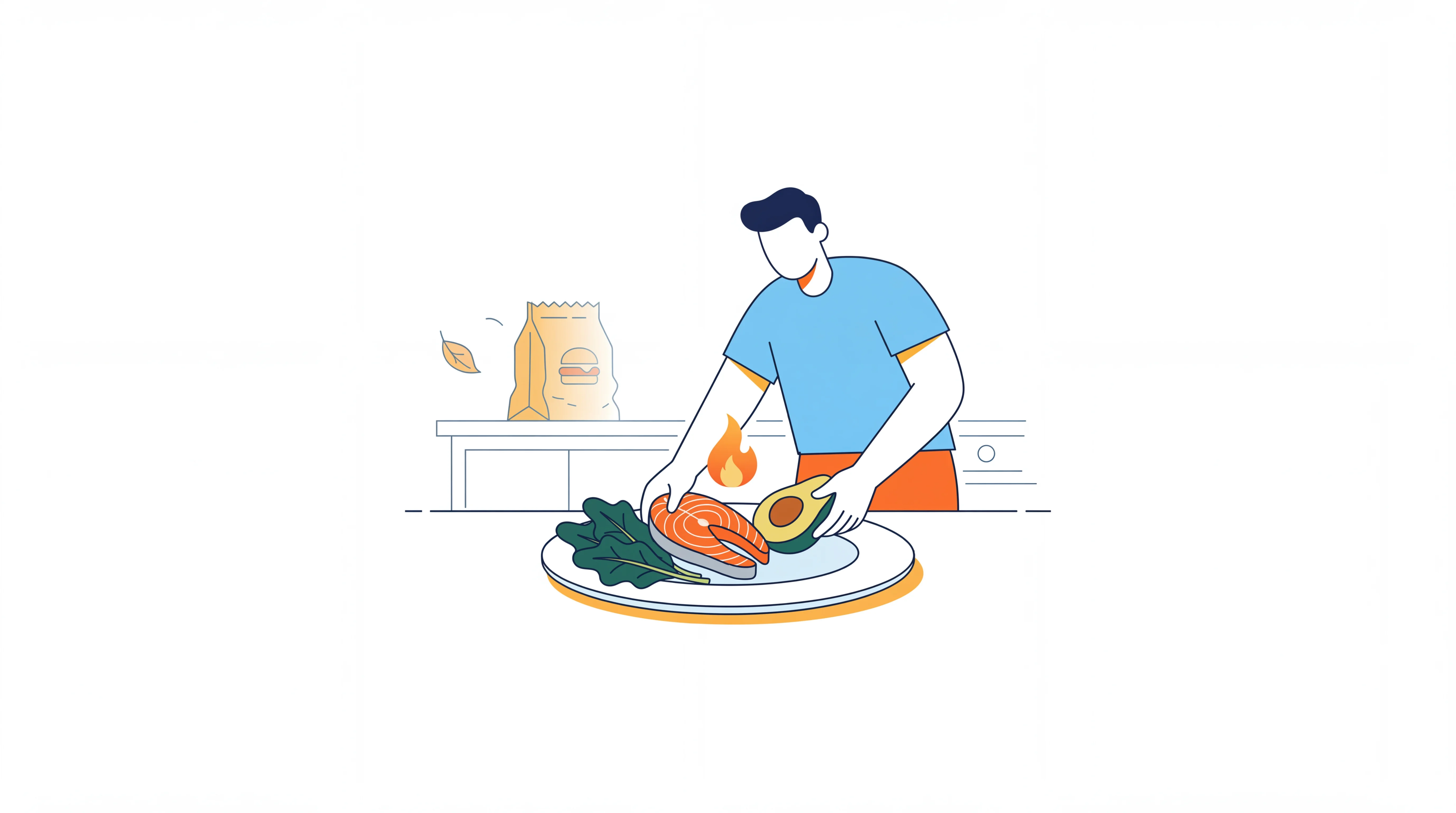
Clean keto is a ketogenic diet that prioritizes whole, minimally processed, nutrient-dense foods while keeping carbohydrates under 50g per day. The macro split remains the same as any keto approach — roughly 70% fat, 20–25% protein, and 5–10% carbs — but food quality is treated as equally important as the numbers.
Clean keto emphasizes:
- Protein sources: Grass-fed beef, wild-caught salmon, sardines, free-range eggs, pasture-raised poultry
- Fats: Avocados, olive oil, avocado oil, grass-fed butter, ghee, nuts, seeds
- Vegetables: Spinach, kale, broccoli, cauliflower, zucchini, asparagus, bell peppers, cucumber
- Dairy: Full-fat Greek yogurt, hard aged cheeses, heavy cream (in moderation)
- Fruit: Berries only — raspberries, blackberries, and strawberries have 3–5g net carbs per half-cup
The emphasis on non-starchy vegetables gives clean keto a meaningful fiber intake, which supports gut health and helps prevent the micronutrient deficiencies that can develop on stricter approaches. Check our low-carb foods list for a complete reference of clean keto-friendly options.
What Is Dirty Keto?
Dirty keto applies the same carbohydrate restriction — under 50g net carbs per day — but places no emphasis on food quality. The defining rule is hitting the carb ceiling; everything else is flexible. This typically means relying heavily on ultra-processed, convenient foods.
Common dirty keto foods include:
- Fast food burgers (bunless) and fried chicken skins
- Deli meats and processed sausages
- Processed cheeses and pre-packaged snacks
- Pork rinds, beef jerky, and protein bars with artificial sweeteners
- Sugar-free sodas and artificially sweetened drinks
- Packaged keto-branded products (bars, cookies, chips)
The appeal is real: dirty keto is faster, cheaper, and requires almost no cooking. You can eat at nearly any fast food restaurant, buy snacks from a gas station, and never spend time in a kitchen. For people who struggle with the prep demands of clean keto, it lowers the barrier to entry significantly.
What About Lazy Keto?
Lazy keto is often confused with dirty keto but they are not the same. Lazy keto only tracks net carbs (not full macros) but still eats mostly whole foods. Dirty keto focuses specifically on food quality — or the lack of it. You can be lazy and clean (track only carbs, eat whole foods), but dirty keto implies processed, convenience-driven eating regardless of how carefully you track.
Clean Keto vs Dirty Keto: Side-by-Side
| Feature | Clean Keto | Dirty Keto |
|---|---|---|
| Carb limit | Under 50g net carbs/day | Under 50g net carbs/day |
| Macro split | ~70% fat, 20–25% protein, 5–10% carbs | ~70% fat, 20–25% protein, 5–10% carbs |
| Food quality | Whole, minimally processed foods | Ultra-processed, convenience foods |
| Fiber intake | Moderate — from non-starchy vegetables | Very low — almost no vegetables |
| Micronutrients | Generally adequate with varied vegetables | Frequently deficient in key vitamins/minerals |
| Sodium load | Moderate — manageable with hydration | High — processed foods are sodium-dense |
| Gut health impact | Supports diverse microbiome | May damage intestinal barrier over time |
| Weight loss (short-term) | Effective | Effective |
| Weight loss (long-term) | More sustainable | Harder to sustain due to nutrition gaps |
| Meal prep required | Yes — moderate to high | Minimal — grab-and-go friendly |
| Cost | Higher (grass-fed, wild-caught) | Lower (fast food, packaged snacks) |
| Inflammation markers | Reduced (anti-inflammatory whole foods) | May increase (processed fats and additives) |
Can You Lose Weight on Dirty Keto?
Yes — and for many people, the short-term results are surprisingly similar to clean keto. If carbohydrates stay below 50g per day, the body enters ketosis and begins burning fat for fuel regardless of whether that fat came from avocado or a gas station snack. Weight loss in the first one to four weeks is often comparable between the two approaches.
The mechanism is identical: depleted glycogen stores force the liver to produce ketone bodies, appetite is suppressed, and a calorie deficit develops naturally. A bunless burger with cheese delivers the right macro profile to maintain ketosis just as reliably as a grass-fed ribeye with roasted broccoli.
Where dirty keto diverges is in sustained weight loss. Ultra-processed foods are less satiating gram-for-gram than whole foods, making it easier to overeat. Sodium-heavy processed meats cause water retention that can mask true fat loss on the scale. And without adequate fiber and micronutrients, energy and recovery suffer — making it harder to stay active and consistent.
For more on breaking through weight loss stalls that often hit dirty keto dieters first, read our guide on keto weight loss stalls.
The Real Risks of Dirty Keto
Micronutrient Deficiencies
This is dirty keto's biggest problem. A 2021 peer-reviewed analysis published in Frontiers in Nutrition found that ketogenic diets are frequently deficient in thiamin, folate, vitamins A, E, B6, C, and D, as well as calcium, magnesium, iron, and potassium. On clean keto, non-starchy vegetables partially address these gaps. On dirty keto — where vegetables are minimal or absent — these deficiencies compound quickly.
Magnesium deficiency alone can cause muscle cramps, poor sleep, and fatigue. Inadequate potassium raises blood pressure risk. Low vitamin C impairs immune function and collagen synthesis. These are not theoretical risks; they are clinical findings from keto studies.
Inflammation
A 2025 systematic review and meta-analysis in Nutrition Reviews found that ketogenic diets significantly reduce the inflammatory markers TNF-alpha and IL-6. But this benefit is driven by whole-food versions of keto. Ultra-processed foods independently promote chronic low-grade inflammation through advanced glycation end products (AGEs), refined seed oils (omega-6 heavy), and food additives — partially or fully reversing keto's anti-inflammatory advantage.
Gut Health
Dirty keto is severely fiber-deficient. Fiber feeds beneficial gut bacteria; without it, microbial diversity declines rapidly. Research from UCSF shows ketogenic diets alter the gut microbiome in humans and mice, with the outcome heavily influenced by food quality. Processed fats increase Desulfovibrio bacteria, which produce hydrogen sulfide — a compound that damages the intestinal mucosal barrier and promotes systemic inflammation.
Cardiovascular Risk
Processed and cured meats, which form the backbone of many dirty keto diets, are classified as Group 1 carcinogens by the World Health Organization and are associated with elevated cardiovascular risk. The high sodium content in processed keto foods also raises blood pressure, partially undoing the cardiovascular benefits that clean keto can provide.
Why Clean Keto Has the Edge Long-Term
Clean keto is not just "dirty keto with better PR." The food quality difference translates into measurable health outcomes:
- Better micronutrient status — leafy greens and fatty fish supply vitamins and minerals that keep energy, immunity, and hormonal function running properly
- Greater satiety — whole protein sources and fiber-containing vegetables keep hunger suppressed more effectively than processed equivalents
- Lower inflammation — anti-inflammatory compounds in olive oil (oleocanthal), fatty fish (EPA and DHA), and colorful vegetables (polyphenols, carotenoids) compound keto's inflammation-reduction effects
- Healthier gut microbiome — fiber from vegetables supports Bacteroidetes and Bifidobacteria, which are associated with better metabolic outcomes and reduced disease risk
- Lean mass preservation — higher-quality protein sources and adequate micronutrients (especially zinc and vitamin D) support muscle repair, which matters for long-term body composition
If your goal is to use keto as a long-term lifestyle rather than a short sprint, clean keto is the more sustainable and health-protective approach. To understand the full macro picture, use a keto macro calculator to dial in your personal targets.
Who Should Start with Dirty Keto?
Dirty keto is not inherently the wrong choice — it depends on your context. There are genuinely useful scenarios where it makes sense as a starting point:
- Absolute beginners who find keto's food prep demands overwhelming and need a lower-friction entry point
- Frequent travelers who have limited access to clean food preparation
- Budget-constrained individuals for whom grass-fed meat and fresh produce are financially difficult
- People transitioning from a high-carb diet who need to get into ketosis quickly before worrying about food quality
- Short-term users (4–6 weeks) who plan to migrate to cleaner eating once keto becomes a habit
The honest framing: dirty keto as a stepping stone is legitimate. Dirty keto as a permanent lifestyle carries meaningful cumulative health risk.
Dirty Keto as an On-Ramp
Getting into ketosis is the hardest part for most beginners. If the prep and cost of clean keto creates a barrier that keeps you from starting at all, dirty keto can get your body into fat-burning mode first. Once the metabolic shift feels natural and appetite is suppressed, clean swaps become much easier to make — you are working with your biology, not against it.
How to Clean Up Your Keto Diet
Making the transition from dirty to clean keto does not require an overnight overhaul. Small, consistent swaps build momentum without the shock of a complete diet change.
Each swap takes roughly 30 seconds of decision-making but delivers a meaningful nutritional upgrade. You do not need to go all-in simultaneously. Read our keto diet for beginners guide for more on building a sustainable keto foundation. For a deeper understanding of net carbs and how to count them accurately on either approach, see our guide on net carbs vs total carbs.
Frequently Asked Questions
What is the difference between dirty keto and clean keto?
Both restrict net carbs to under 50g per day. Clean keto emphasizes whole, nutrient-dense foods — grass-fed meats, fatty fish, eggs, avocados, and non-starchy vegetables. Dirty keto hits the same carb target with ultra-processed foods, fast food, and packaged snacks. Same metabolic state, very different nutritional outcomes.
Can you lose weight on dirty keto?
Yes. Ketosis drives fat loss regardless of food source, so short-term weight loss is achievable on dirty keto. However, poor micronutrient status, high sodium, and ultra-processed food intake make it harder to sustain results beyond 2–3 months.
Is dirty keto bad for you?
Dirty keto is higher-risk than clean keto, particularly over the long term. The primary concerns are micronutrient deficiencies, increased inflammation, impaired gut health, and the independent health risks associated with ultra-processed food consumption.
What is lazy keto?
Lazy keto tracks only net carbs — not full macros — but still centers whole foods. Dirty keto is specifically about food quality, not tracking method. You can eat dirty keto while tracking all macros, or eat lazy keto while eating clean whole foods.
How do I transition from dirty keto to clean keto?
Replace one processed food per week with a whole-food equivalent. Start with the easiest swap — often adding a serving of leafy greens — and build from there. Full transition takes 4–6 weeks when done gradually.
Start Tracking Your Keto Macros
Whether you are starting with dirty keto or going straight to clean, knowing your actual carb, fat, and protein numbers is what keeps you in ketosis and on track. Estimating by eye rarely works — especially when navigating fast food menus or packaged foods with hidden carbs.
Download Caloria and track every meal with a quick photo — no manual food searches, no spreadsheets, no guesswork:
Snap a photo of your meal, see your macros instantly, and know exactly whether you are staying under your carb limit — whether your plate is a grass-fed ribeye with roasted broccoli or a bunless fast-food burger.