By Dr. Michael Torres · Published August 15, 2025 · 6 min read
If you have ever hesitated to take creatine because you are watching your weight, you are not alone. The supplement has a reputation for causing the number on the scale to jump — and that is technically true. But creatine calories are essentially zero, and the weight you gain is not fat. Understanding the difference can change how you approach both supplementation and fat loss.
Does Creatine Have Calories?
Pure creatine monohydrate contains negligible calories. A standard 5g serving typically delivers fewer than 20 calories total — and most of those trace calories come from manufacturing additives or fillers, not from creatine itself.
By comparison, a gram of protein or carbohydrate provides 4 calories, and a gram of fat provides 9 calories. Creatine's caloric contribution to your day is so small it is effectively irrelevant to any calorie budget.
Check the Label
Not all creatine products are equal. Flavored creatine blends, pre-workout formulas, and "creatine with carbs" products can contain added sugars and maltodextrin that do add meaningful calories. Always read the nutrition facts panel on your specific product.
Why Creatine Causes Weight Gain
If creatine has almost no calories, why does it often cause the scale to rise by 2–5 pounds in the first week? The answer is water retention — and it is a sign the supplement is working.
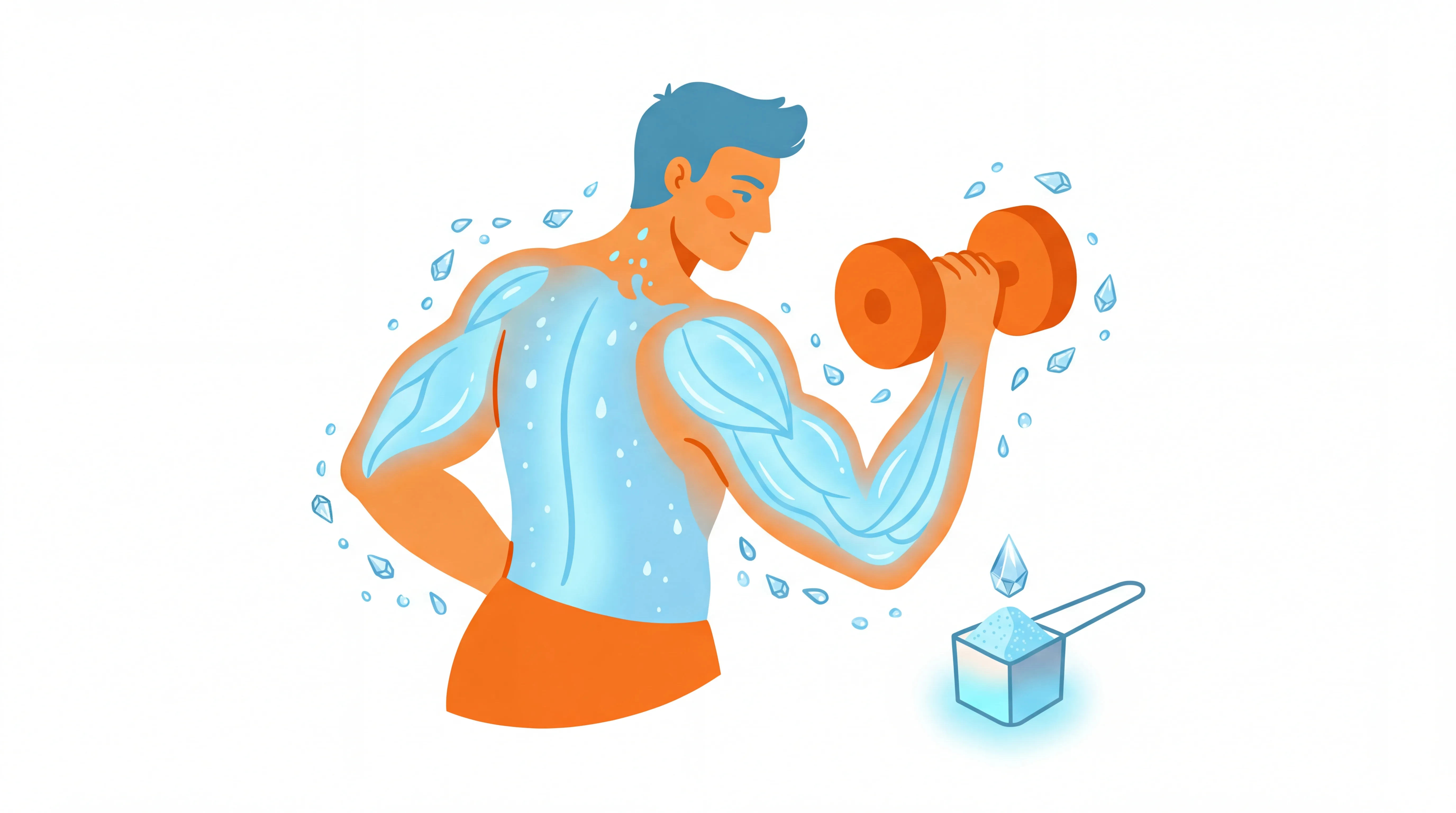
Creatine draws water into muscle cells through osmosis. As creatine concentrations in muscle tissue increase, the cells pull in more fluid to maintain balance. This intracellular hydration is what makes muscles look fuller and feel stronger during workouts.
This is not the same as subcutaneous bloating or fat gain. The water is stored inside the muscle, which is why creatine users often report that their muscles look bigger and harder — not puffier or softer.
| Effect | Timeline | Cause | Permanent? |
|---|---|---|---|
| Scale weight increase | Days 1–7 | Water drawn into muscle cells | No — stabilizes after loading |
| Muscle fullness | Days 3–10 | Intracellular hydration | Persists while supplementing |
| Strength gains | Weeks 2–4 | More ATP available for high-intensity efforts | Maintained with consistent use |
| Lean muscle gains | Weeks 4–12 | Enhanced training output + recovery | Yes, if training continues |
| Body fat change | Weeks 4–12 | Slight reduction with resistance training | Yes, with ongoing training |
Creatine and Fat Loss: What the Research Shows
Here is the part that surprises most people: creatine does not just avoid causing fat gain — it may actively support better body composition when combined with resistance training.
A 2020 meta-analysis published in Nutrients analyzed 19 studies involving 609 participants and found that creatine supplementation led to a small but significant reduction in body fat percentage, with adults over 50 seeing the most consistent improvements. The mechanism appears to involve increased mitochondrial activity in fat tissue and higher overall energy expenditure driven by greater training volume.
A 2024 systematic review and dose-response meta-analysis further confirmed these findings: average body mass increased by 0.86 kg (mostly lean mass), fat-free mass increased by 0.82 kg, and fat mass showed a small average reduction. The key is pairing creatine with consistent resistance training and adequate protein intake.
The logic is straightforward. Creatine lets you train harder, which builds more muscle. More muscle means a higher resting metabolic rate. A higher resting metabolic rate burns more calories at rest — including from fat stores. Creatine does not burn fat directly, but it creates the conditions that make fat loss easier over time.
If you are currently eating in a calorie deficit for weight loss, creatine can help you preserve muscle while losing fat — one of the most common challenges in a cutting phase. And if your goal is to gain muscle while managing calories carefully, creatine is one of the most well-researched tools available.
Does Creatine Break a Fast?
For those following intermittent fasting protocols, this is a common concern. The answer is straightforward: pure creatine monohydrate does not break a fast.
Creatine contains no calories, no carbohydrates, and no protein that would trigger an insulin response or interrupt the fasted state. You can take it during your fasting window without disrupting the metabolic benefits of fasting.
The caveat is flavored or premixed products. If your creatine contains added sugars, fruit extracts, or caloric sweeteners, those ingredients can break a fast. Stick to unflavored creatine monohydrate powder if fasting compliance matters to you.
Creatine vs. Other Common Supplements
| Supplement | Calories per Serving | Affects Weight? | Breaks Fast? |
|---|---|---|---|
| Creatine monohydrate (5g) | ~0 kcal | Temporary water weight only | No |
| Whey protein (30g) | ~120 kcal | Supports lean muscle | Yes |
| BCAAs (10g) | ~40 kcal | Minor, protein-sparing | Debated |
| Pre-workout (flavored) | 20–100 kcal | Depends on formula | Often yes |
| Caffeine (plain) | 0 kcal | No direct effect | No |
Compared to other popular supplements, creatine stands out as calorie-free and uniquely effective at improving muscle strength and body composition over time. For a deeper look at how protein powders fit into your nutrition, see our guide on whey protein benefits and how to build smart post-workout nutrition.
The Bottom Line
Creatine has almost no calories. The weight you gain when starting creatine is water stored in muscle cells — not fat. Research consistently shows that creatine does not increase body fat and may, when paired with resistance training, gently improve body composition over time.
If you are counting calories for weight loss or maintenance, creatine will not meaningfully affect your budget. What it will do is help you train harder, recover faster, and build the lean muscle that supports long-term fat loss.
Medical Disclaimer
This article is for informational purposes only and does not constitute medical or dietary advice. Consult a healthcare professional before starting any new supplement regimen, especially if you have kidney disease or other medical conditions.
Track What Actually Moves the Needle
Understanding your supplement's calorie content is one piece of the puzzle — the bigger picture is knowing exactly how your total nutrition stacks up each day. Caloria makes it easy: snap a photo of your meal and get an instant breakdown of calories, protein, carbs, and fat.
Download Caloria and see what you're really eating:
Frequently Asked Questions
Does creatine have calories?
Pure creatine monohydrate contains essentially zero calories. A standard 5g serving provides fewer than 20 calories, and most of those come from processing additives rather than creatine itself. For practical purposes, creatine does not meaningfully contribute to your daily calorie intake.
Does creatine make you fat?
No. Research consistently shows that creatine does not increase body fat or fat mass. Any weight gain from creatine is due to water being drawn into muscle cells — not fat accumulation. Studies actually show a small reduction in body fat percentage with creatine plus resistance training.
Can I take creatine while trying to lose weight?
Yes. Creatine does not add meaningful calories and may support fat loss indirectly by preserving lean muscle mass during a calorie deficit. More muscle mass means a higher resting metabolic rate, which supports long-term fat loss.
Does creatine break intermittent fasting?
Pure creatine monohydrate does not break a fast. It contains no calories, does not spike insulin, and has no carbohydrates or sugars. Some flavored or premixed creatine products contain added sweeteners — always check the label if fasting is important to your routine.
How much weight do you gain from creatine?
Most people gain 2–5 pounds in the first one to two weeks of creatine supplementation. This is almost entirely water weight — creatine pulls fluid into muscle cells, causing a temporary increase on the scale. This is not fat gain, and the scale increase typically stabilizes after the initial loading period.