By Dr. Dave Patel · Published November 7, 2024 · 9 min read
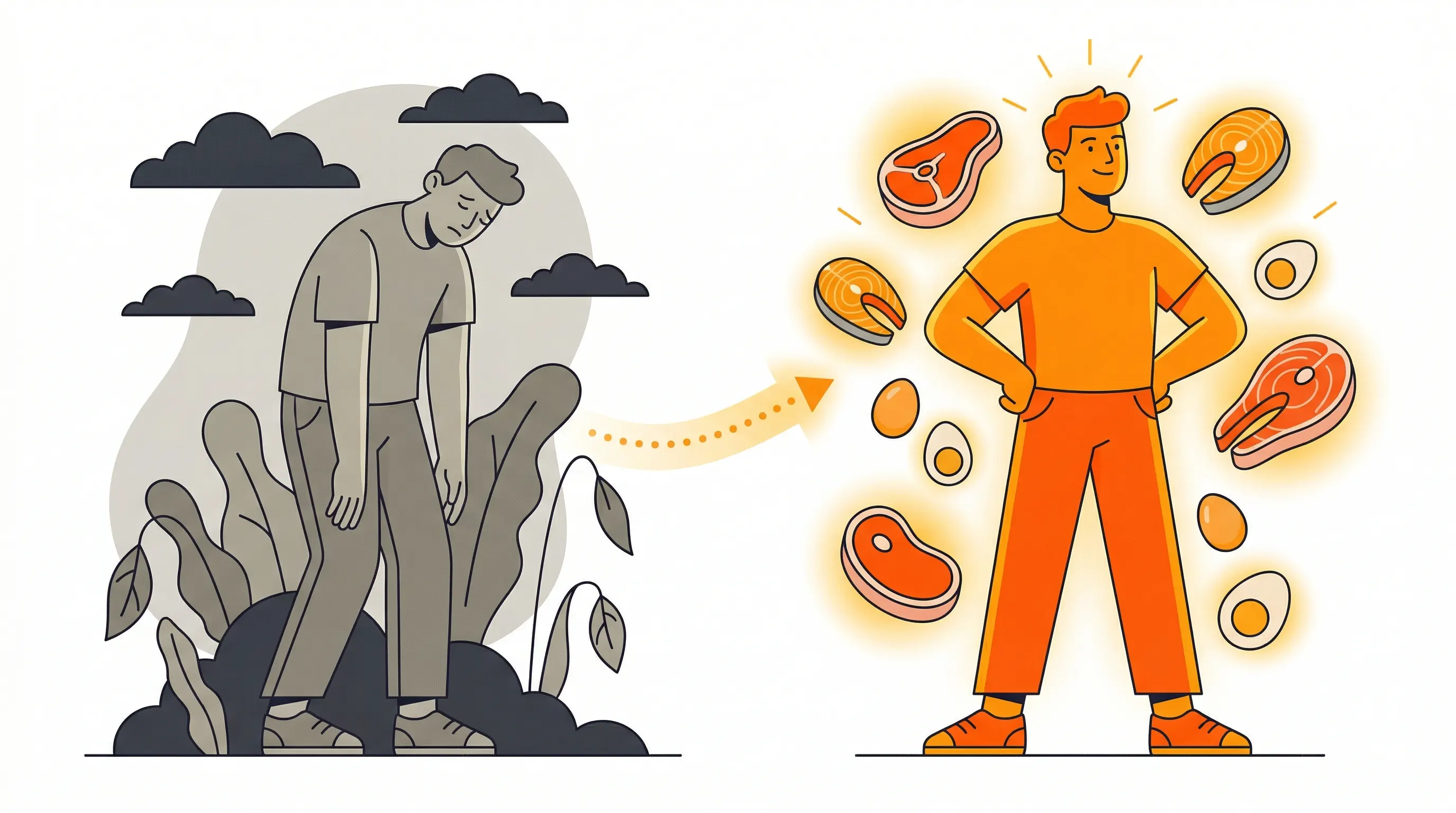
Carnivore diet before and after transformations are flooding social media — dramatic weight loss photos, claims of cleared skin, and reports of vanished joint pain. But how much of this is real, and how much is selection bias?
The answer lies somewhere in the middle. A survey of 2,029 carnivore dieters published in Current Developments in Nutrition found that 95% reported improved overall health and median BMI dropped from 27.2 (overweight) to 24.3 (normal). Those are meaningful numbers — but they come from self-selected, self-reported data, not a controlled trial.
This guide breaks down what the science actually shows, what realistic timelines look like, and where the risks hide.
What Is the Carnivore Diet?
The carnivore diet is an elimination-style eating pattern that restricts food to animal products only — meat, fish, eggs, and sometimes dairy. All plant foods, including vegetables, fruits, grains, legumes, nuts, and seeds, are excluded.
Think of it as the most extreme version of a low-carb diet. Where keto limits carbohydrates to roughly 20–50 grams per day, the carnivore diet aims for virtually zero.
| Feature | Standard Diet | Keto Diet | Carnivore Diet |
|---|---|---|---|
| Carb intake | 200–300 g/day | 20–50 g/day | ~0 g/day |
| Plant foods | Unrestricted | Limited | Eliminated |
| Protein emphasis | Moderate | Moderate–high | Very high |
| Fiber intake | 25–30 g/day | 10–15 g/day | 0 g/day |
| Typical foods | Mixed | Meat, nuts, low-carb veg | Meat, fish, eggs |
People adopt the carnivore diet for various reasons: weight loss, autoimmune symptom relief, digestive improvements, or simply curiosity after seeing dramatic before-and-after photos online. The question is whether the results hold up under scrutiny.
Carnivore Diet Before and After: A Realistic Timeline
Results vary significantly based on starting weight, metabolism, and activity level. But the research and large-scale surveys give us a reasonable picture of what to expect.
Week 1: The Adaptation Phase
The first week is the hardest. Your body is depleting glycogen stores and transitioning to fat and protein as primary fuel. Common experiences include:
- Rapid water weight loss — 3 to 7 pounds as glycogen releases stored water
- Fatigue and brain fog — your brain is adjusting to fewer carbohydrates
- Digestive changes — constipation or diarrhea as your gut microbiome shifts
- Irritability and cravings — sugar withdrawal is real
Transition Side Effects
The first 7 to 14 days often feel worse before they feel better. This adaptation period is sometimes called "carnivore flu" — similar to the keto flu. Stay hydrated, ensure adequate electrolytes (sodium, potassium, magnesium), and avoid judging the diet by week one alone.
Days 14–30: Early Results
By the end of the first month, most people report:
- 8 to 15 pounds lost on the scale (5–10 pounds of actual fat loss)
- Reduced hunger and cravings — high protein and fat meals are satiating
- Improved mental clarity — many describe a "lifted fog" effect
- Stable energy — no afternoon crashes from blood sugar swings
A key factor: the carnivore diet naturally creates a calorie deficit for most people. Protein is the most satiating macronutrient, and without hyper-palatable processed foods, total caloric intake tends to drop without conscious restriction. If you're curious about how calories drive weight loss, that mechanism is the same regardless of the diet framework.
Months 2–3: Visible Changes
This is where before-and-after photos start to become striking:
- 15 to 25 pounds of total weight loss for overweight individuals
- 2 to 4 inches off the waist — visceral fat often responds early
- Improved body composition — high protein intake helps preserve lean mass
- Skin and joint improvements — frequently reported, though not yet confirmed by controlled trials
Beyond 90 Days
Longer-term results are less well documented. The Harvard-affiliated survey found participants had been following the diet for a median of 14 months. Weight loss typically slows after the initial 3 months as the body reaches a new equilibrium, consistent with the metabolic adaptation patterns seen in any sustained calorie deficit.
Why the Carnivore Diet Produces Weight Loss
The weight loss from a carnivore diet is not magic — it follows the same energy balance principles as any effective dietary approach. Here is what drives the results:
High Protein, High Satiety
Protein has the highest thermic effect of food (TEF) — your body uses 20–30% of protein calories just for digestion and absorption, compared to 5–10% for carbs and 0–3% for fat. This means a 2,000-calorie carnivore meal effectively provides fewer net calories than a 2,000-calorie mixed meal. Learn more about how this works in our guide on whether all calories are the same.
Protein also suppresses ghrelin (the hunger hormone) more effectively than carbs or fat. When every meal is built around meat, fish, and eggs, most people naturally eat less without feeling deprived.
Elimination of Processed Foods
By cutting out all processed carbohydrates, sugary snacks, seed oils, and ultra-processed foods, the carnivore diet removes many of the most calorie-dense, least satiating foods in the modern diet. This alone accounts for a significant portion of the calorie reduction people experience.
Ketosis and Fat Adaptation
With virtually zero carbohydrate intake, the body enters ketosis — burning fat for fuel and producing ketone bodies. This metabolic shift can enhance fat oxidation and may contribute to the stable energy levels and mental clarity that carnivore dieters frequently report.
The Bottom Line on Weight Loss
The carnivore diet works for weight loss primarily because it increases protein intake, eliminates processed foods, and creates an automatic calorie deficit through high satiety. These mechanisms are well understood — the diet is simply a framework that makes them easier to achieve for some people.
What the Science Actually Shows
Let's separate the peer-reviewed evidence from the anecdotal reports.
The Harvard Survey (Lennerz et al., 2021)
The largest study to date surveyed 2,029 adults consuming a carnivore diet for at least 6 months. Key findings:
- 95% reported improved overall health
- Median BMI decreased from 27.2 to 24.3
- Diabetes prevalence dropped from 4.3% to 1.1% among respondents
- Fewer than 2% reported worsening of any health condition
- Satisfaction was high — 83% consumed a carnivore diet for more than 12 months
Limitations: self-selected participants, self-reported data, no control group. People who had bad experiences likely quit and did not complete the survey.
Scoping Review (Nutrients, 2025)
A scoping review published in Nutrients analyzed all available human studies on the carnivore diet. The review found:
- Only 9 human studies existed at the time of publication
- Individual studies reported weight reduction and improved satiety
- No studies reported clinical endpoints (heart attacks, mortality, disease incidence)
- Potential nutrient deficiencies were a consistent concern
Research Gap
The evidence base for the carnivore diet is still thin. Most data comes from surveys and case reports, not randomized controlled trials. This doesn't mean the diet doesn't work — it means we can't say with certainty that it's safe or optimal long term.
Carnivore Diet Risks and Side Effects
No honest before-and-after discussion is complete without addressing risks. Here's what the evidence highlights.
Nutrient Deficiencies
A 2025 case study in the Journal of the International Society of Sports Nutrition assessed the nutrient composition of several carnivore meal plans and found consistent shortfalls in:
- Vitamin C — meat contains minimal amounts; scurvy risk is theoretical but real
- Thiamin (B1) — consistently insufficient across all meal plans analyzed
- Calcium and magnesium — low unless bone broth or dairy is included
- Fiber — zero intake, which may affect gut microbiome diversity long term
Including organ meats (liver, kidney, heart) and eggs can close some of these gaps. Liver alone is exceptionally rich in vitamins A, B12, folate, and iron.
Cardiovascular Concerns
High intake of saturated fat from red meat can raise LDL cholesterol. The Nutrients scoping review flagged elevated LDL and total cholesterol as consistent findings in carnivore diet studies. Whether elevated LDL from a whole-food, unprocessed diet carries the same cardiovascular risk as elevated LDL from a processed-food diet remains debated among researchers.
Digestive Changes
Without fiber, some people experience constipation, while others report improved digestion. The gut microbiome shifts significantly on a zero-fiber diet — the long-term implications of this shift are unknown.
| Risk | Severity | Mitigation |
|---|---|---|
| Vitamin C deficiency | Moderate | Include liver and organ meats |
| Elevated LDL cholesterol | Moderate–High | Regular blood work, limit processed meats |
| Calcium/magnesium gaps | Moderate | Add bone broth, dairy, or supplements |
| Zero fiber intake | Unknown long-term | Monitor digestive health closely |
| Social and practical difficulty | High | Plan meals ahead, communicate with family |
Who Should — and Shouldn't — Try It
The carnivore diet is not for everyone. Here's an honest assessment.
May Benefit From Trying It
- People who have struggled with other diets and want a simple, rules-based framework
- Those with suspected food sensitivities who want to use it as a 30-day elimination diet
- Individuals who respond well to high-protein diets and find them satiating
Should Avoid It or Use Caution
- Anyone with kidney disease — very high protein intake stresses the kidneys
- People with familial hypercholesterolemia or high cardiovascular risk
- Pregnant or breastfeeding individuals — nutrient diversity is critical
- Anyone with a history of disordered eating — extreme restriction can trigger relapse
Medical Disclaimer
The carnivore diet is a restrictive eating pattern. Consult a healthcare professional before starting, especially if you have existing medical conditions. Get baseline blood work before you begin and retest at 30 and 90 days.
How to Track Your Results Properly
Before-and-after photos are motivating, but they're not data. If you want to understand what's actually happening in your body, track more than just the scale.
Knowing your daily protein requirements helps you evaluate whether the carnivore diet is actually hitting your targets — or overshooting them.
If you want to see exactly how your meals stack up, try Caloria — just snap a photo and get your calorie and macro breakdown instantly, even for all-meat meals.
Carnivore Diet Before and After: Key Takeaways
The carnivore diet produces real, measurable results for many people — particularly in the first 90 days. Weight loss of 15 to 25 pounds, improved energy, reduced cravings, and clearer skin are commonly reported and partially supported by survey data.
But the results are not unique to the carnivore framework. They stem from increased protein, eliminated processed foods, and an automatic calorie deficit — mechanisms that work across many dietary patterns. The carnivore diet is one way to achieve them, not the only way.
The risks are real too: nutrient gaps, elevated cholesterol, and zero long-term safety data from controlled trials. If you try it, do so with medical supervision, regular blood work, and a clear plan for reintroducing foods if needed.
Whatever dietary approach you choose, tracking your intake removes the guesswork. Understanding how many calories you need and whether you're actually hitting that number is what separates sustainable results from short-lived transformation photos.
Start Tracking Smarter
Understanding your nutrition is the first step — tracking it consistently is the second. Caloria makes it effortless: take a photo of your meal, and the app handles the rest.
Download Caloria and see what you're really eating: